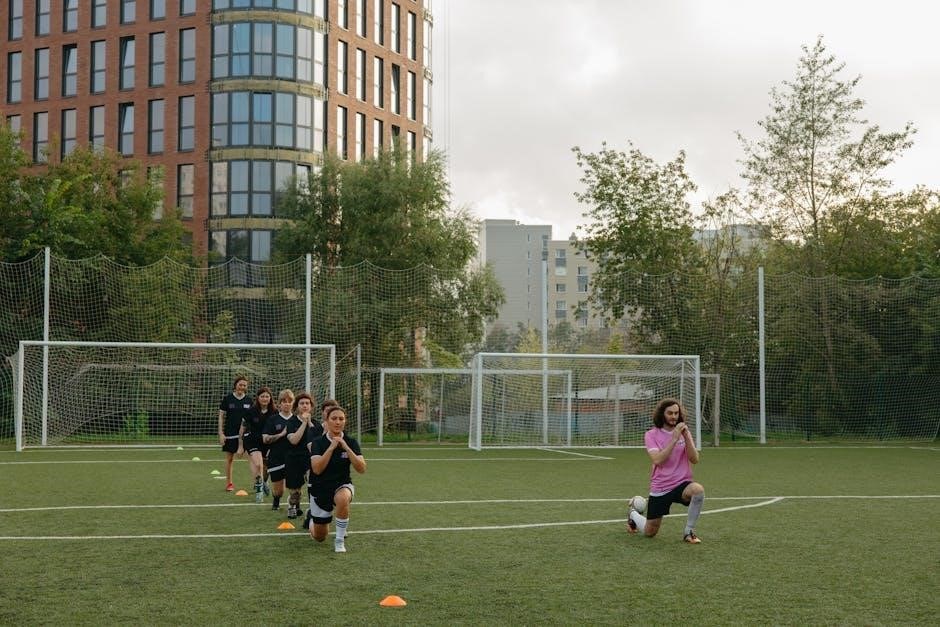
Soccer Drills for 5 Year Olds: A Comprehensive Plan
This plan details engaging soccer drills for 5-year-olds, focusing on fun, fundamental skill development, and fostering a lifelong love for the beautiful game.
Introducing soccer to five-year-olds is about more than just sport; it’s about holistic development. This stage prioritizes building a positive association with physical activity, teamwork, and enjoyment. Drills should be playful, non-competitive, and focused on fundamental movement skills. The goal isn’t mastery, but sparking a passion for the game and establishing a foundation for future skill acquisition. Early exposure cultivates coordination, agility, and social skills, setting the stage for a healthy, active lifestyle.
The Importance of Fun and Engagement
For five-year-olds, fun is paramount! Engagement fuels learning and prevents burnout. Drills should be game-based, imaginative, and celebrate effort over outcome. Keep sessions short, dynamic, and filled with positive reinforcement. A playful atmosphere encourages participation and builds confidence. Avoid complex instructions or excessive correction; focus on creating a positive experience where children naturally develop a love for soccer and physical activity through joyful exploration.
Focus on Fundamental Skills
At this age, prioritize core skills: dribbling, passing, and shooting – but simplified! Dribbling focuses on ball familiarity and control. Passing introduces the concept of sharing the ball with gentle pushes. Shooting builds confidence with low-pressure attempts. Forget complex tactics; emphasize proper form and repetition. Keep drills short and sweet, reinforcing basic movements. Mastery of these fundamentals builds a strong foundation for future development.
Dribbling Drills for Beginners
Start with “Follow the Leader” – coach dribbles, kids mimic. Then, “Red Light, Green Light” adds listening skills. Simple cone weaving encourages control. Focus on small touches and keeping the ball close. Avoid looking down! Encourage using both feet. Make it a game – “Can you dribble to the tree?” – to maintain engagement. Prioritize fun over perfection; celebrate effort and participation.
Cone Dribbling Variations
Introduce different cone patterns: straight lines, zigzags, and circles. Challenge players to dribble around cones with their dominant and non-dominant foot. Add a speed element – “fast feet” between cones. “Cone Knockdown” involves dribbling to knock over cones. Vary cone spacing for difficulty. Emphasize close control and quick changes of direction. Keep it playful and adjust based on individual skill levels, ensuring success and enjoyment.
Red Light, Green Light Dribbling
A classic game adapted for soccer! Players dribble within a defined area. When you shout “Green Light,” they dribble freely. “Red Light” means stopping the ball immediately with their foot. Add “Yellow Light” for slow dribbling. This drill enhances listening skills, ball control, and quick reactions. Encourage players to use small touches when stopping. It’s a fun way to practice control and spatial awareness, keeping them engaged.
Passing Drills: Introducing the Concept
Begin with simple partner passing to introduce the idea of sharing the ball. Use soft, lightweight balls to build confidence. Focus on inside-of-the-foot passing, emphasizing accuracy over power. Players should be close together initially, gradually increasing the distance. Encourage verbal communication – saying each other’s names before passing. This builds teamwork and understanding of passing as a cooperative skill.
Partner Passing with Soft Balls
Utilize soft soccer balls or foam balls for a safe and enjoyable experience. Players pair up, facing each other approximately 5-10 feet apart. Focus on using the inside of the foot for accurate passes. Encourage gentle touches and emphasize looking up to find their partner. Keep it playful, celebrating successful passes with high-fives and positive reinforcement. This drill builds foundational passing technique and spatial awareness.
Target Passing for Accuracy
Set up cones or use flat markers as targets at varying distances. Players practice passing the ball, aiming for these targets with the inside of their foot. Start close and gradually increase the distance as skills improve. Encourage players to focus on precision and control, rather than power. Celebrate successful hits, fostering confidence and a sense of accomplishment. This drill enhances passing accuracy and ball control.
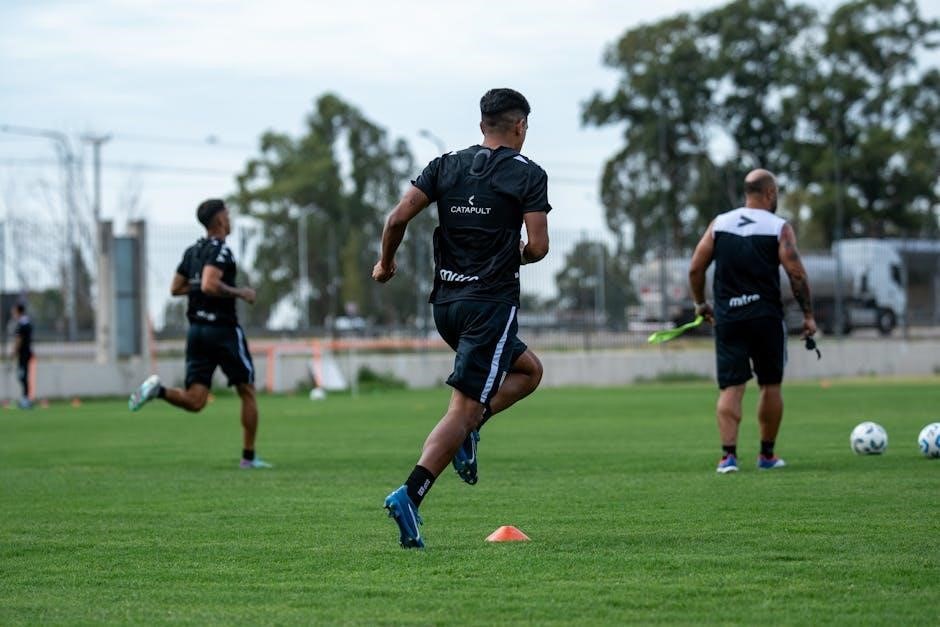
Shooting Drills: Building Confidence
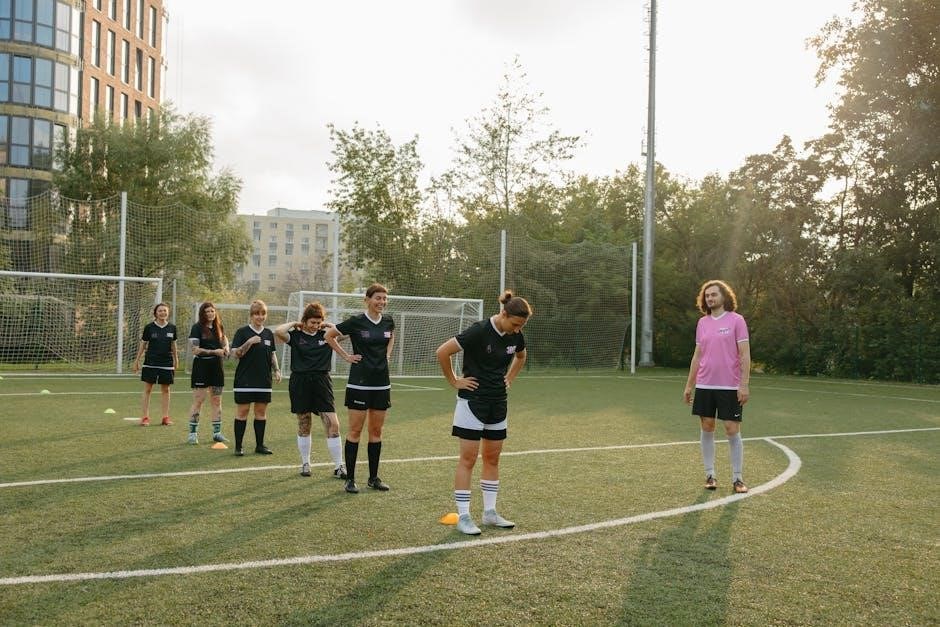
Begin with stationary goal shooting, emphasizing proper form – plant foot beside the ball, striking with the laces. Encourage a follow-through motion. Progress to shooting with a gently rolled ball, allowing players to practice striking a moving target. Positive reinforcement is key; celebrate effort and improvement, not just goals. Focus on technique and building confidence, making shooting fun and achievable for young players.
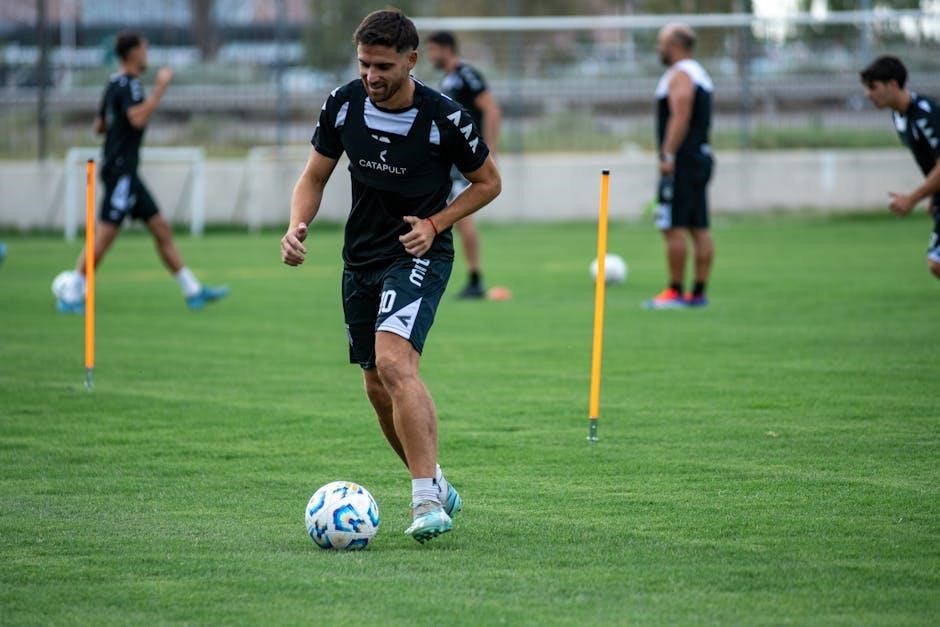
Shooting at a Stationary Goal
Start close to the goal, approximately 10-15 feet, to build success. Players take turns shooting, focusing on striking the ball with their laces. Emphasize a “follow-through” motion towards the target. Offer gentle guidance on foot placement and body positioning. Celebrate every attempt, regardless of outcome, fostering a positive and encouraging environment. Gradually increase distance as confidence and skill develop.
Shooting with a Moving Ball
Introduce a simple passing sequence before shooting. A coach or teammate gently passes the ball to the player, who then takes a touch and shoots at the goal. This drill helps develop timing and coordination. Encourage players to control the pass before shooting, rather than a one-touch attempt. Focus on accuracy over power at this age, building a solid foundation.
Warm-up Activities for 5 Year Olds
Begin with engaging, non-technical movements. Animal walks – bear crawls, crab walks, and frog jumps – are fantastic for dynamic stretching and fun. Imitation games, where kids mimic soccer actions, prepare muscles. Simple stretches, like arm circles and leg swings (gently!), increase flexibility. Keep it brief, energetic, and playful, prioritizing enjoyment over rigid structure to build enthusiasm.
Animal Walks and Imitation Games
These activities build coordination and make warming up enjoyable! Encourage bear crawls, crab walks, and frog jumps – promoting full-body movement. Imitate soccer actions like kicking, dribbling, and shooting (without a ball initially). Add silly animal sounds for extra fun! Focus on mimicking form, not perfection, fostering creativity and physical engagement. Keep it lighthearted and adaptable to maintain their attention.
Simple Stretching Exercises
Introduce gentle stretches to improve flexibility and prevent injuries. Include arm circles, leg swings (supported if needed), and torso twists. Encourage reaching for toes (don’t force it!). Make it playful – “pretend you’re a tall tree reaching for the sun!” Hold each stretch briefly (5-10 seconds). Prioritize dynamic stretches over static ones, focusing on movement rather than prolonged holds. Always supervise and ensure proper form.
Small-Sided Games (1v1, 2v2)
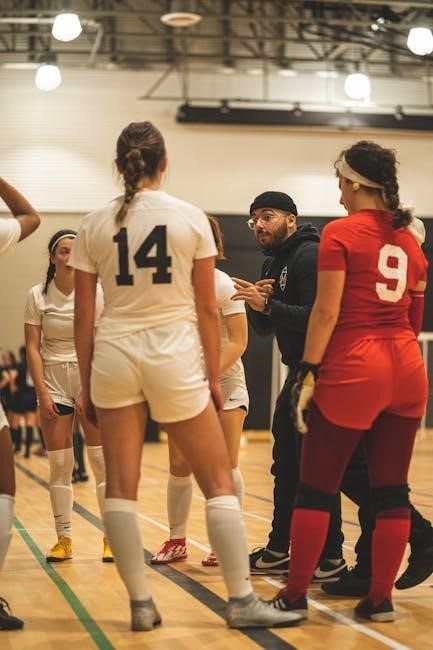
Introduce 1v1 and 2v2 games to apply learned skills in a fun, game-like setting. These games promote decision-making, spatial awareness, and individual ball control. Keep areas small to maximize touches. Focus on effort and participation, not winning. Encourage dribbling and attempting to score. Modify rules as needed – perhaps no goalies initially. Emphasize positive reinforcement and celebrate effort!
Modified Games for Age Appropriateness
Adapt traditional soccer rules to suit 5-year-olds’ developmental stage. Reduce field size significantly, allowing frequent ball touches. Consider removing goalies initially, focusing on attacking play. Implement “everyone gets a turn” rules to ensure participation. Shorten game durations to maintain engagement. Prioritize fun and exploration over strict adherence to rules. Celebrate effort and positive attitudes above all else, fostering a positive experience.
Emphasis on Participation and Effort
Prioritize every child’s involvement and celebrate their attempts, regardless of success. Focus on effort, sportsmanship, and teamwork over winning. Offer constant encouragement and positive reinforcement. Avoid comparisons between players; each child develops at their own pace. Create a non-competitive atmosphere where mistakes are viewed as learning opportunities. Ensure all players experience equal playing time and feel valued within the team.
Developing Coordination and Agility
Enhance young players’ physical literacy through fun, age-appropriate activities; Implement obstacle courses incorporating soccer balls to improve footwork and spatial awareness. Simplified agility ladder drills promote quick feet and coordination. Animal walks (bear crawls, crab walks) build strength and body control. Focus on playful movement, encouraging children to explore different ways to move with and without the ball, fostering overall athleticism.
Obstacle Courses with Soccer Balls
Create engaging obstacle courses using cones, hoops, and soccer balls. Players dribble through the course, navigating challenges like weaving between cones or passing the ball through hoops. Vary the course layout to keep it interesting and promote adaptability. Encourage creativity and playful exploration, focusing on maintaining ball control while moving. This builds coordination, agility, and confidence with the ball at their feet.
Agility Ladder Drills (Simplified)
Introduce simplified agility ladder drills to enhance footwork and coordination. Focus on basic patterns like two-foot in each square or lateral shuffles. Keep the ladder short and the steps slow, emphasizing proper technique over speed. Make it fun by turning it into a game, like seeing who can complete the pattern with the fewest errors. This builds foundational agility skills crucial for soccer.
Yearly Training Plan Overview (5-7 Year Olds)
A yearly plan should prioritize skill development progression, starting with fundamental movement and ball familiarity. Seasonal focus shifts from basic dribbling in fall to introducing passing in spring. Integrate small-sided games consistently. Crucially, avoid overtraining; prioritize enjoyment and participation. Regular monitoring of player fatigue and enthusiasm is vital for a positive experience, building a strong foundation for future soccer development.
Seasonal Focus: Skill Development Progression
Fall focuses on individual ball control – dribbling and basic coordination. Winter transitions to introducing simple passing concepts with soft balls. Spring emphasizes shooting technique and accuracy towards a stationary goal. Summer incorporates more small-sided games, reinforcing learned skills in a fun, game-like environment. This progression builds a solid technical base, preparing players for more complex drills and tactical understanding.
Integrating Games into Training Sessions
Small-sided games (1v1, 2v2) are crucial for applying skills learned during drills. Modify rules for age-appropriateness, prioritizing participation and effort over winning. Games like “Red Light, Green Light” with dribbling enhance listening skills and ball control. Regularly incorporate game play to maintain engagement and reinforce fundamental techniques in a dynamic, enjoyable setting, fostering a positive learning experience;
Avoiding Overtraining and Injuries
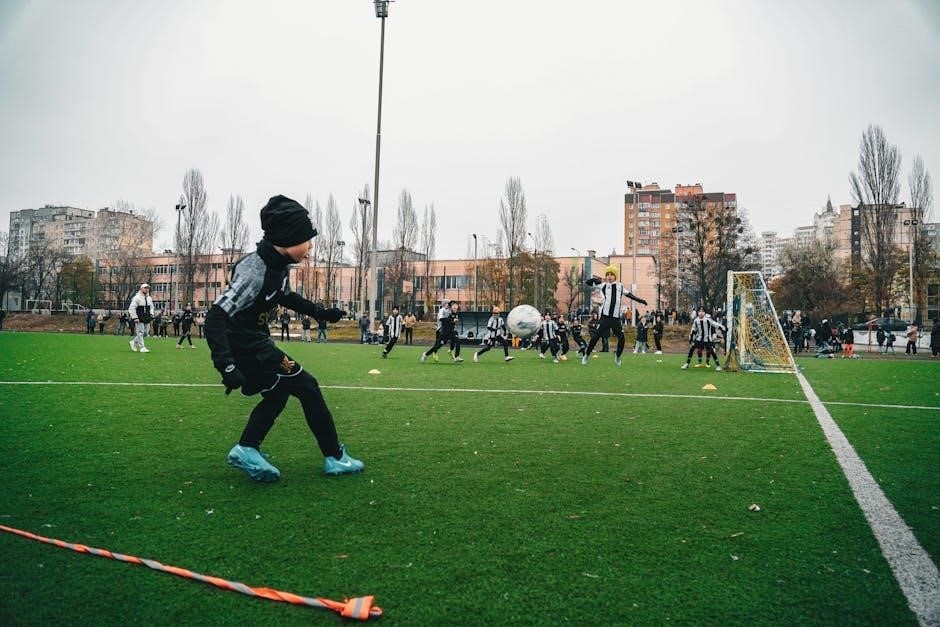
Prioritize proper warm-up and cool-down routines before and after each session to prepare muscles and aid recovery. Monitor player fatigue and enthusiasm; shorter, frequent sessions are better than long, exhausting ones. Encourage hydration and rest. Avoid pushing children beyond their physical limits, focusing on skill development rather than intense competition to minimize injury risk.
Proper Warm-up and Cool-down Routines
Begin with 5-10 minutes of light cardio, like animal walks and imitation games, to increase blood flow. Follow with simple stretching, holding each stretch briefly. Cool-downs should mirror warm-ups – light cardio followed by gentle stretching. Emphasize fun and participation; avoid static stretching before activity. These routines prepare young muscles and prevent injuries.
Monitoring Player Fatigue and Enthusiasm
Observe players for signs of tiredness – decreased effort, loss of focus, or complaints of discomfort. Keep sessions short and engaging, prioritizing fun over intensity. Frequent breaks are crucial! Gauge enthusiasm; if players seem bored, adjust drills. Positive reinforcement and encouragement maintain motivation. Avoid pushing children beyond their limits to prevent burnout and injury.
Resources for Soccer Coaches
Numerous online drill databases and websites offer a wealth of ideas for 5-year-old soccer training. Youngstown Soccer Academy provides resources, while others focus on small-sided games and passing drills. Essential equipment includes soft soccer balls, cones, and agility ladders. Adapt drills based on skill level, ensuring progressive challenges and individualized support for each young player’s development.
Online Drill Databases and Websites
Coaches can find valuable resources online, including drill databases offering a variety of age-appropriate activities. Websites like Youngstown Soccer Academy provide training plans and drills specifically designed for young players. These platforms often categorize drills by skill – dribbling, passing, shooting – and age group, simplifying session planning and ensuring engaging, effective training sessions.
Recommended Soccer Training Equipment
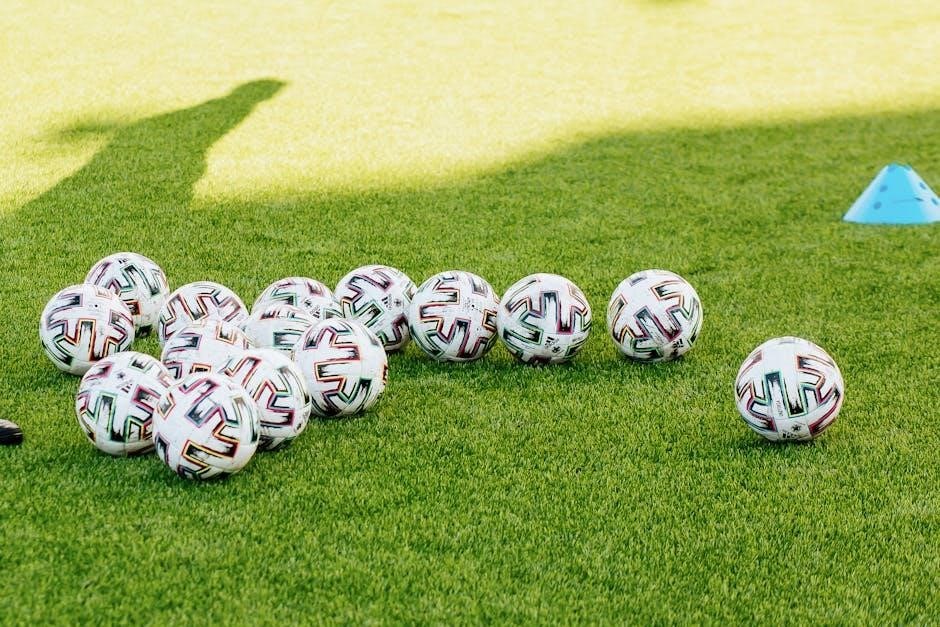
Essential equipment for 5-year-old soccer training includes size 3 soccer balls – lighter and easier to control. Cones are vital for creating dribbling courses and marking boundaries. Small, portable goals enhance shooting drills and game play. An agility ladder (simplified version) aids coordination. Prioritize safety with soft, flexible equipment suitable for young children.
Adapting Drills for Different Skill Levels
Drills should be progressively challenging, catering to varied abilities. For beginners, focus on larger spaces and simpler tasks like rolling the ball. More advanced players can navigate tighter spaces with increased speed. Modify passing distances and target sizes accordingly. Offer individualized support and encouragement, ensuring every child feels successful and engaged, building confidence.
Progressive Difficulty and Challenges
Introduce challenges gradually to maintain engagement and promote growth. Start with basic dribbling, then add obstacles or defenders. Progress passing from stationary to moving targets, increasing distance. Shooting drills evolve from stationary goals to game-like scenarios. Celebrate small victories and emphasize effort over outcome, fostering a positive learning environment.
Individualized Attention and Support
Recognize each child learns at their own pace; provide tailored support. Offer encouragement and positive reinforcement, focusing on individual progress. Adjust drill complexity based on skill level, ensuring everyone feels successful. Spend one-on-one time offering specific feedback. Celebrate effort and participation, building confidence and a positive attitude towards learning soccer skills.
Parental Involvement and Support
Encourage parents to actively support their child’s soccer journey. Positive reinforcement at home is crucial; celebrate effort, not just results. Parents can practice simple drills with their kids, reinforcing skills. Communicate regularly with coaches about progress and areas for improvement. A supportive home environment fosters a love for the game and builds confidence.
Encouraging Positive Reinforcement
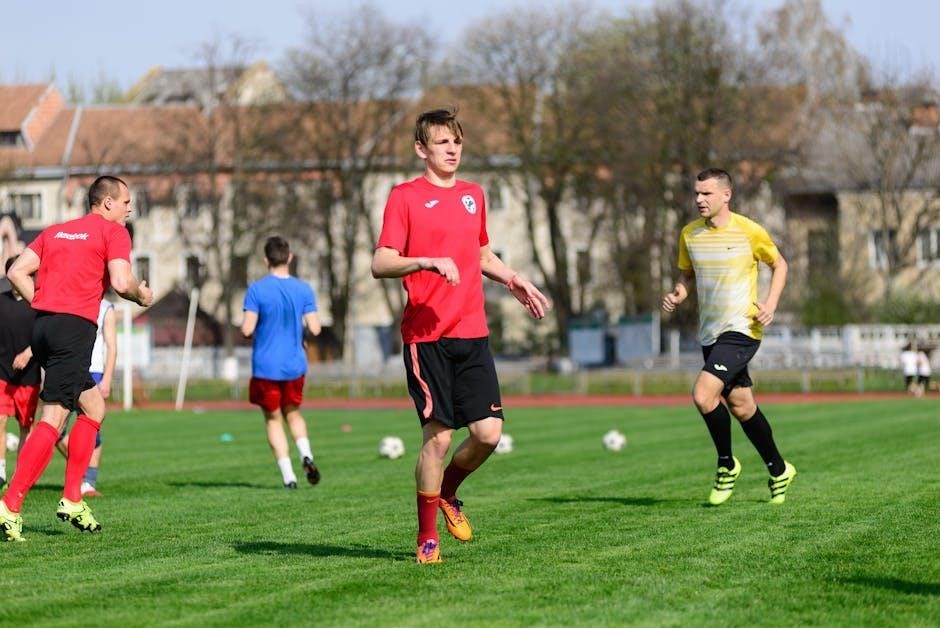
Focus on praising effort, sportsmanship, and participation over winning. Specific praise – “Great hustle!” or “Nice try!” – is more effective than generic compliments. Create a supportive atmosphere where mistakes are seen as learning opportunities. Celebrate small victories and encourage teamwork. Positive reinforcement builds confidence and fosters a genuine love for soccer, ensuring a fun experience for all.
Creating a Supportive Soccer Environment
Foster a climate of inclusivity and respect where every child feels valued and safe to explore. Minimize competition and emphasize skill development. Encourage parent involvement through positive sideline behavior and support. Discourage negativity and focus on building camaraderie amongst players. A supportive environment maximizes enjoyment and promotes a lifelong passion for soccer, prioritizing fun and growth.
Sample Practice Session Plan (60 Minutes)
A typical session begins with a 10-minute warm-up, including animal walks and light stretching. Skill development (30 minutes) focuses on dribbling and passing basics. Conclude with 20 minutes of small-sided games (1v1 or 2v2) emphasizing participation. Prioritize fun and keep drills short and engaging. Ensure ample water breaks and positive reinforcement throughout the entire 60-minute practice.
Warm-up (10 minutes)
Begin with five minutes of animal walks – bear crawls, crab walks, and frog jumps – to build coordination. Follow with simple stretching, focusing on legs and arms, held for 10-15 seconds each. Incorporate imitation games, mimicking soccer movements. This prepares young muscles for activity and enhances body awareness, ensuring a safe and energetic practice session.
Skill Development (30 minutes)
Dedicate ten minutes to dribbling drills, utilizing cones for varied challenges. Spend another ten minutes on partner passing with soft balls, emphasizing gentle touches. Conclude with five minutes of shooting at a stationary goal, focusing on technique over power. Encourage constant movement and positive reinforcement, building confidence and fundamental skills in a playful environment.
Game Play (20 minutes)
Implement small-sided games like 1v1 or 2v2, modified for age-appropriateness, ensuring maximum participation. Focus on effort and enjoyment rather than strict rules or winning. Encourage players to apply the skills practiced during the session. Rotate players frequently to provide equal opportunities and maintain enthusiasm. Prioritize a supportive environment where mistakes are learning opportunities.
Future Skill Development (6-7 Year Olds)
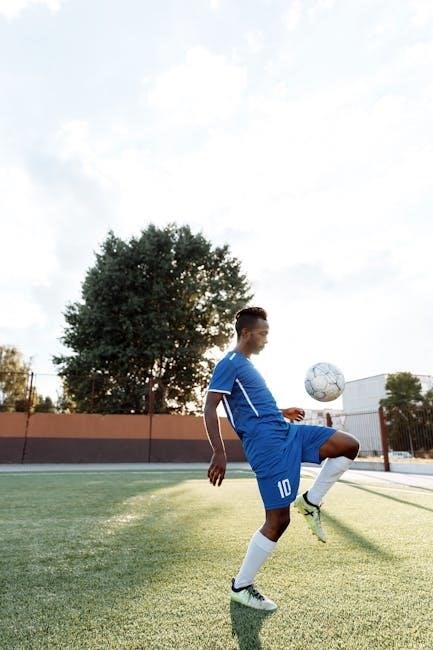
As players progress, introduce basic tactical concepts like passing lanes and creating space. Build a foundation for competitive play by emphasizing teamwork and strategic positioning. Continue refining fundamental skills while layering in more complex movements. Encourage decision-making during gameplay, fostering creativity and problem-solving abilities on the field.
Begin introducing simple tactical ideas, such as spreading out on the field and supporting teammates with passes. Focus on understanding space – both having it and denying it to opponents. Drills should emphasize making quick decisions and recognizing opportunities to pass or move into open areas. Keep explanations concise and age-appropriate, prioritizing play.
Building a Foundation for Competitive Play
While competition isn’t the primary focus at this age, subtly introduce elements that prepare them for future play. Encourage effort, teamwork, and positive sportsmanship. Small-sided games provide opportunities to apply learned skills in a game-like setting. Focus on creating a supportive environment where mistakes are seen as learning opportunities, fostering confidence and resilience.

About the author