Author Archive akeem

Byakeem

b7 manual

The BMW Alpina B7 manual is an essential guide for owners and enthusiasts‚ offering detailed insights into the vehicle’s features‚ maintenance‚ and performance capabilities.

1.1 Overview of the BMW Alpina B7

The BMW Alpina B7 is a high-performance luxury sedan that combines exceptional power with refined comfort. As a collaboration between BMW and Alpina‚ it offers a unique blend of sporty dynamics and premium amenities. The B7 features a powerful V8 engine‚ delivering impressive horsepower and torque‚ paired with an advanced 8-speed automatic transmission with manual shifting mode. Its sleek exterior design‚ aerodynamic enhancements‚ and opulent interior make it a standout in its class. With cutting-edge technology‚ including an intuitive infotainment system and advanced safety features‚ the Alpina B7 is tailored for discerning drivers who seek both exhilaration and elegance on the road.

1.2 Importance of the Manual for Owners and Enthusiasts

The BMW Alpina B7 manual is a critical resource for both owners and enthusiasts‚ providing detailed insights into the vehicle’s operation‚ maintenance‚ and performance capabilities. It serves as a comprehensive guide for understanding the car’s advanced features‚ troubleshooting issues‚ and ensuring optimal performance. For owners‚ the manual is essential for routine maintenance‚ warranty compliance‚ and maximizing the lifespan of the vehicle. Enthusiasts benefit from its technical specifications‚ allowing for customization and tuning. The manual also includes DIY maintenance tips‚ electrical diagrams‚ and bolt torques‚ making it an invaluable tool for those who want to personalize or upgrade their B7. It ensures a seamless driving experience and safeguards investments in this luxury sedan.

History of the BMW Alpina B7

The BMW Alpina B7’s history began with Alpina’s collaboration with BMW‚ producing high-performance variants. The B7 emerged as a luxury sedan‚ blending power with refinement‚ evolving successfully over decades.

2;1 Evolution of the Alpina B7 Model

The Alpina B7 model has undergone significant evolution since its introduction‚ with each generation enhancing performance and luxury. Early models featured powerful engines‚ while newer iterations incorporated advanced technologies like the 8-speed automatic transmission with manual shifting mode. The 2012 model‚ for instance‚ saw improvements in both power output and fuel efficiency. Additionally‚ the integration of Switch-Tronic technology in later models allowed for a sportier driving experience. The B7’s design has also evolved‚ with modern models boasting sleek aerodynamic enhancements and interiors that blend comfort with cutting-edge technology. This continuous refinement has solidified the B7’s position as a premier luxury sedan.

2.2 Key Milestones in the Development of the B7

The BMW Alpina B7 has reached several key milestones‚ marking its evolution as a high-performance luxury sedan. The 2007 model introduced a V8-4.4L supercharged engine‚ setting a benchmark for power. In 2012‚ the B7 featured an 8-speed automatic transmission with manual shifting mode‚ enhancing drivability. The 2017 model expanded with advanced technology‚ including a robust infotainment system. By 2020‚ the B7 achieved all-wheel-drive capability and a top speed of over 200 mph. These milestones reflect Alpina’s commitment to blending luxury with performance‚ solidifying the B7’s reputation as a premier vehicle in its class.

Technical Specifications of the BMW Alpina B7

The BMW Alpina B7 boasts an 8-speed automatic transmission with manual shifting mode‚ providing smooth and precise gear changes for optimal performance and control.

3;1 Engine and Performance Capabilities

The BMW Alpina B7 is powered by a robust V8 engine‚ delivering exceptional horsepower and torque. Its 4.4-liter supercharged V8 ensures a smooth and powerful driving experience‚ capable of achieving remarkable acceleration and top speeds. The engine’s advanced technology optimizes fuel efficiency while maintaining high performance. The B7’s powertrain is finely tuned to provide responsive acceleration‚ making it a standout in its class. With its powerful engine‚ the Alpina B7 combines luxury and performance seamlessly‚ offering drivers an unparalleled experience on the road. This model truly exemplifies the perfect blend of power and sophistication.

3.2 Transmission and Drivetrain Features

The BMW Alpina B7 features an advanced 8-speed automatic transmission with manual shifting mode‚ offering smooth and precise gear changes. Equipped with Switch-Tronic technology‚ drivers can enjoy manual gear selection for a sporty driving experience. The drivetrain is designed for optimal performance‚ with all-wheel drive providing enhanced traction and stability. This combination ensures superior acceleration and responsiveness‚ making the B7 a pleasure to drive. The transmission’s adaptability and the drivetrain’s efficiency contribute to both performance and fuel efficiency‚ catering to a wide range of driving conditions. This system is a testament to Alpina’s commitment to blending power with refined driving dynamics.

Maintenance and Service Guidelines

Regular servicing ensures optimal performance and longevity of the BMW Alpina B7. Follow scheduled maintenance and DIY care tips for routine checks and minor repairs.

4.1 Scheduled Maintenance Requirements

The BMW Alpina B7 requires regular maintenance to uphold its performance and reliability. Owners should adhere to the factory-recommended service schedule‚ which includes oil changes every 5‚000 to 7‚500 miles‚ tire rotations‚ and inspections of brakes and suspension components. Additionally‚ the manual advises checking fluid levels‚ air filters‚ and belts at specified intervals. Proper adherence to these guidelines ensures the vehicle operates within optimal parameters‚ preventing premature wear and potential costly repairs. DIY maintenance tips are also provided for minor tasks‚ allowing owners to stay proactive in maintaining their B7’s health and longevity on the road.

4.2 DIY Maintenance Tips for B7 Owners

DIY maintenance for the BMW Alpina B7 can enhance owners’ connection with their vehicle while saving costs. Regular oil changes‚ tire rotations‚ and fluid checks are essential. Owners can inspect air filters and replace them as needed to maintain optimal engine performance. Additionally‚ checking brake pads androtors periodically ensures safety and reliability. Simple tasks like cleaning sensors and ensuring proper tire pressure can significantly improve fuel efficiency and handling. The manual provides detailed instructions for these tasks‚ empowering owners to take charge of minor maintenance. By following these tips‚ B7 owners can extend their vehicle’s lifespan and maintain its luxurious performance capabilities without professional assistance.

Repair and Service Manuals

Repair and service manuals for the BMW Alpina B7 provide comprehensive guides for maintenance and repairs‚ ensuring optimal performance and longevity of the vehicle.

5.1 2007 BMW Alpina B7 (E65) V8-4.4L SC (N62) Repair Manual

The 2007 BMW Alpina B7 (E65) V8-4.4L SC (N62) repair manual is a detailed resource for servicing and repairing this high-performance luxury sedan. It includes electrical diagrams‚ bolt torques‚ and labor estimates‚ ensuring precise repairs. Whether addressing engine issues or suspension components‚ this manual provides step-by-step instructions. It covers the supercharged V8 engine‚ unique to the B7‚ and offers insights into maintaining its exceptional performance. DIY enthusiasts and professional mechanics alike can rely on this manual to keep the Alpina B7 in peak condition‚ preserving its power and luxury for years to come.

5.2 2012 BMW Alpina B7 Service and Repair Manual

The 2012 BMW Alpina B7 service and repair manual is a comprehensive guide tailored for this model year‚ offering precise instructions for maintenance and repairs. It covers the 4.4L V8 engine‚ 8-speed automatic transmission‚ and advanced drivetrain features. Detailed diagrams and troubleshooting sections ensure accurate diagnostics. The manual also includes scheduled maintenance plans and tips for optimizing performance. Whether addressing routine service or complex repairs‚ this resource is indispensable for both DIY enthusiasts and professional mechanics. It ensures the B7’s luxury and power are preserved‚ making it a must-have for owners seeking reliability and peak performance.

Owner’s Manual Sections

The BMW Alpina B7 owner’s manual includes detailed guides for the infotainment system‚ navigation‚ and control systems‚ ensuring drivers can fully utilize the vehicle’s advanced features effortlessly.

6.1 Infotainment System Guide

The BMW Alpina B7 infotainment system guide provides comprehensive instructions for navigating the advanced multimedia features. Owners can learn how to operate the high-resolution display‚ access various entertainment options‚ and integrate smartphones seamlessly. The manual details steps for setting up Bluetooth connectivity‚ using voice commands‚ and managing audio settings. Additionally‚ it covers the iDrive system‚ highlighting shortcuts and customization options for a personalized experience. Troubleshooting tips are also included to address common issues‚ ensuring uninterrupted enjoyment of the vehicle’s entertainment and information technologies.

6.2 Navigation and Control Systems

The BMW Alpina B7 manual provides detailed guidance on the navigation and control systems‚ enabling drivers to optimize their driving experience. The system features voice-command functionality‚ real-time traffic updates‚ and customizable map views. Controls are intuitively designed‚ with the iDrive controller and steering wheel buttons offering easy access to navigation‚ audio‚ and phone functions. The manual explains how to set waypoints‚ use gesture controls‚ and integrate smartphone apps for enhanced connectivity. Additionally‚ it covers advanced safety features like adaptive cruise control and lane-keeping assist‚ ensuring a seamless and safe driving experience. Mastering these systems enhances both convenience and safety on the road.

Transmission and Gearbox Details

The BMW Alpina B7 features an 8-speed automatic transmission with manual shifting mode‚ offering smooth and responsive gear changes for enhanced performance and driving control.

7.1 8-Speed Automatic Transmission with Manual Shifting Mode

The BMW Alpina B7 is equipped with an advanced 8-speed automatic transmission‚ designed to deliver seamless power delivery and precise gear shifts. This transmission features a manual shifting mode‚ allowing drivers to take control of gear changes for a more engaging driving experience. The system integrates perfectly with the vehicle’s performance capabilities‚ ensuring optimal acceleration and responsiveness. Additionally‚ the manual shifting mode enhances fuel efficiency by enabling drivers to adjust gear ratios according to driving conditions. This combination of automatic convenience and manual control makes the B7 a versatile choice for both everyday driving and spirited performance.

7.2 Switch-Tronic Technology for Manual Gear Selection

The BMW Alpina B7 features Switch-Tronic technology‚ enabling manual gear selection for a sporty driving experience. This system allows drivers to shift gears manually using steering-wheel-mounted paddles or the gear selector‚ providing precise control over the 8-speed automatic transmission. Switch-Tronic enhances driver engagement by delivering quick and responsive shifts‚ particularly in Sport mode. The technology seamlessly integrates with the vehicle’s adaptive transmission logic‚ ensuring smooth transitions and optimized performance. Whether cruising in Comfort mode or pushing the limits on a winding road‚ Switch-Tronic offers the perfect balance of convenience and driver involvement‚ making it a standout feature of the B7’s drivetrain.

Luxury and Comfort Features

The BMW Alpina B7 offers premium luxury with its ergonomic design‚ advanced infotainment systems‚ and high-quality materials‚ ensuring a refined and comfortable driving experience for all passengers.

8.1 Interior Design and Amenities

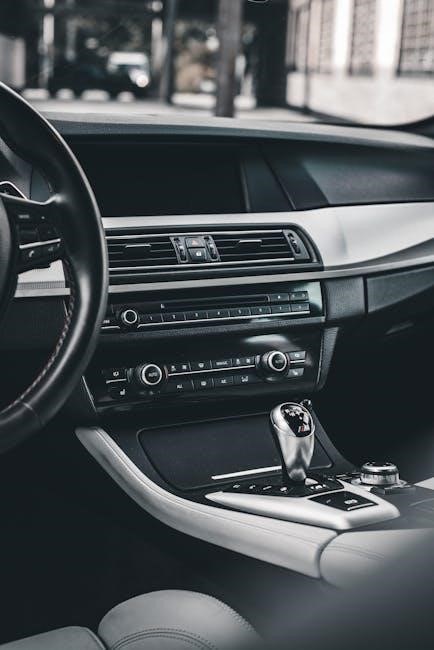
The BMW Alpina B7 boasts a meticulously crafted interior‚ featuring premium leather upholstery‚ heated and ventilated seats‚ and a panoramic moonroof for enhanced comfort and ambiance. The cabin is adorned with fine wood trim and aluminum accents‚ reflecting a blend of elegance and sportiness. The infotainment system includes a high-resolution touchscreen‚ navigation‚ and a Harman Kardon surround sound system‚ ensuring an immersive entertainment experience. Additionally‚ the B7 offers ample legroom and cargo space‚ making it a practical choice for both daily driving and long-distance trips. These amenities collectively create a luxurious environment tailored to discerning drivers and passengers alike.

8.2 Advanced Technology and Safety Features

The BMW Alpina B7 is equipped with cutting-edge technology and advanced safety features‚ ensuring a seamless and secure driving experience. The infotainment system boasts a high-resolution touchscreen display‚ voice command functionality‚ and seamless smartphone integration via Apple CarPlay and Android Auto. Safety features include adaptive cruise control‚ lane departure warning‚ and automatic emergency braking‚ which work in tandem to prevent accidents. Additionally‚ the B7 offers a 360-degree camera system and parking sensors for enhanced visibility and precision. These technologies not only enhance safety but also elevate the overall driving pleasure‚ making the B7 a standout in its class.

Performance and Handling

The BMW Alpina B7 delivers exceptional performance with its 8-speed automatic transmission and manual shifting mode‚ offering precise control and exhilarating acceleration‚ reaching top speeds effortlessly.

9.1 Acceleration and Top Speed Capabilities

The BMW Alpina B7 showcases remarkable acceleration‚ achieving 0-60 mph in just 4.3 seconds. Its powerful engine‚ combined with the 8-speed automatic transmission‚ enables a top speed of 205 mph‚ delivering a blend of luxury and high performance seamlessly. The manual shifting mode further enhances driver control‚ allowing precise gear changes to maximize power delivery. This capability makes the B7 a standout in its class‚ offering both exceptional speed and refined handling for an unparalleled driving experience. The vehicle’s aerodynamic design and advanced engineering contribute to its impressive performance metrics‚ solidifying its reputation as a high-performance luxury sedan.

9.2 Suspension and Steering Performance

The BMW Alpina B7 features an adaptive air suspension system‚ providing exceptional ride comfort and precise handling. The suspension automatically adjusts to driving conditions‚ ensuring stability at high speeds and a smooth ride in urban environments. The active roll stabilization minimizes body lean during cornering‚ enhancing agility. The steering system‚ equipped with integral active steering‚ offers precise control and responsiveness‚ particularly during dynamic driving. These advanced systems work in harmony to deliver a balanced blend of comfort and sporty handling‚ making the B7 a versatile performer on both highways and winding roads. The suspension and steering systems are finely tuned to complement the vehicle’s powerful engine and transmission.

Exterior Design and Aerodynamics

The BMW Alpina B7 boasts a sleek‚ aerodynamic design with a sporty stance‚ featuring lightweight materials and aerodynamic spoilers to enhance airflow and reduce drag.

10.1 Body Style and Aerodynamic Enhancements

The BMW Alpina B7 features a streamlined body style with aerodynamic enhancements‚ including a lowered front splitter and rear diffuser‚ which improve downforce and reduce drag. The sedan’s silhouette is both elegant and sporty‚ with precise lines that enhance its dynamic appearance. The use of lightweight materials contributes to better performance and efficiency. Additionally‚ the B7’s aerodynamic design includes subtle spoilers and air curtains to optimize airflow‚ ensuring stability at high speeds. These enhancements not only improve handling but also underscore the vehicle’s aggressive yet refined aesthetic appeal‚ making it a standout in its class.

10.2 Wheel and Tire Options

The BMW Alpina B7 offers a range of wheel and tire options‚ combining style and performance. Standard 20-inch forged alloy wheels provide strength and a sleek appearance‚ while optional 21-inch wheels enhance both aesthetics and handling. Tire selections include high-performance rubber designed for grip and responsiveness‚ ensuring optimal traction in various driving conditions. Seasonal tire packages are also available‚ catering to different climates and driving preferences. The B7’s wheel and tire configurations are tailored to complement its aerodynamic design and luxury appeal‚ offering owners the perfect blend of form and function to match their lifestyle and driving demands.

Owner’s Manual for Specific Models

The BMW Alpina B7 owner’s manual is tailored for specific models like the 2013 SWB and 2017 G11/G12‚ providing detailed guidance for each variant’s unique features.

11.1 2013 BMW Alpina B7 SWB Owner’s Manual

The 2013 BMW Alpina B7 SWB owner’s manual offers comprehensive guidance tailored to this specific model; It covers features unique to the SWB variant‚ such as its sport-tuned suspension and exclusive interior options. The manual provides detailed instructions for operating the infotainment system‚ navigation‚ and advanced driver-assistance technologies. Additionally‚ it includes maintenance schedules‚ troubleshooting tips‚ and explanations of the Switch-Tronic technology for manual gear selection. Owners can find everything from setting up the customizable driving modes to understanding the performance-enhancing features of this high-powered sedan. This manual is essential for maximizing the driving experience and maintaining the vehicle’s premium condition.

11.2 2017 BMW Alpina B7 Owner’s Manual for G11‚ G12

The 2017 BMW Alpina B7 owner’s manual for G11 and G12 models is designed to help owners optimize their driving experience. It provides detailed instructions for the advanced infotainment system‚ navigation‚ and customizable driver modes. The manual also covers maintenance schedules‚ troubleshooting procedures‚ and explanations of the vehicle’s unique features‚ such as the Switch-Tronic technology for manual gear selection. Owners can learn how to personalize settings‚ utilize safety features‚ and understand the performance capabilities of the B7. This comprehensive guide is essential for getting the most out of the 2017 Alpina B7‚ ensuring both convenience and peak performance.

Purchase and Ownership Guide

Buying a used BMW Alpina B7 requires research on market value‚ history‚ and condition. Ownership involves balancing luxury with maintenance costs for optimal performance and longevity.

12.1 Buying a Used BMW Alpina B7

When purchasing a used BMW Alpina B7‚ thorough research is essential. Check the vehicle’s history for any accidents or major repairs. Inspect the interior and exterior for signs of wear. Review maintenance records to ensure all scheduled services were performed. A pre-purchase inspection by a certified mechanic is highly recommended. Test drive the car to assess performance and comfort. Consider certified pre-owned options for added warranty benefits. Compare prices across multiple listings to ensure a fair deal. Ensure all original manuals and keys are included. Be cautious of low-priced offers that may indicate hidden issues. Prioritize well-maintained models for long-term reliability and satisfaction.

12.2 Cost of Ownership and Maintenance

Owning a BMW Alpina B7 involves significant costs‚ including premium fuel‚ insurance‚ and maintenance. Regular servicing by certified technicians is crucial‚ with intervals every 12‚000 to 15‚000 miles. Expect higher parts costs due to the car’s luxury and performance nature. Tire replacements‚ especially for high-performance models‚ can be expensive. Annual insurance premiums are substantial‚ reflecting the vehicle’s value. Depreciation should be considered‚ though the B7 retains value well. Budgeting for unexpected repairs‚ such as advanced electrical systems‚ is wise. Overall‚ while rewarding‚ the B7 demands a considerable financial commitment for upkeep and operation.

Repair Manuals and Literature

Repair manuals for the BMW Alpina B7 provide detailed instructions‚ electrical diagrams‚ and bolt torque specifications‚ ensuring comprehensive guidance for maintenance and repairs.

13.1 Detailed Repair Manual for 2007 BMW Alpina B7 (E65)

The 2007 BMW Alpina B7 (E65) repair manual offers a comprehensive guide for servicing and repairing the V8-4.4L SC (N62) engine. It includes detailed electrical diagrams‚ recommended bolt torque specifications‚ and estimated labor times. This manual is essential for both DIY enthusiasts and professional mechanics‚ providing precise instructions for maintaining and restoring the vehicle’s performance. With step-by-step procedures and technical insights‚ it ensures accurate repairs and upgrades. Whether addressing engine issues or fine-tuning suspension‚ this manual is an indispensable resource for anyone working on the 2007 Alpina B7.

13.2 Electrical Diagrams and Bolt Torques

The BMW Alpina B7 repair manual includes detailed electrical diagrams and bolt torque specifications‚ essential for precise repairs and maintenance. These diagrams provide a clear visual representation of the vehicle’s electrical systems‚ helping technicians and enthusiasts identify and troubleshoot issues efficiently. Bolt torque specifications are meticulously listed‚ ensuring that all components are secured to factory-recommended standards. This section is particularly useful for those working on complex systems like the engine‚ suspension‚ and drivetrain. By following the guidelines‚ users can maintain the vehicle’s performance and safety‚ avoiding potential damage from over- or under-tightening critical bolts.

The BMW Alpina B7 manual is a comprehensive guide‚ covering performance‚ maintenance‚ and troubleshooting. It empowers owners and technicians to optimize the vehicle’s potential‚ ensuring safety and longevity. Resources for further support are also provided.

14.1 Final Thoughts on the BMW Alpina B7 Manual

The BMW Alpina B7 manual is a vital resource for owners‚ offering comprehensive guidance on performance‚ maintenance‚ and troubleshooting. It provides detailed insights into the vehicle’s advanced features‚ ensuring optimal functionality and longevity. With clear instructions and technical specifications‚ the manual empowers users to address common issues and enhance their driving experience. Whether for routine maintenance or complex repairs‚ the manual serves as an indispensable companion. Its structured approach ensures that both novice and experienced enthusiasts can navigate the content effortlessly‚ making it an essential tool for anyone seeking to maximize the potential of their BMW Alpina B7.

14.2 Resources for Further Reading and Support

For further exploration‚ enthusiasts can access detailed reviews and guides from reputable sources like Car and Driver‚ offering insights into the BMW Alpina B7’s performance and features. Repair Surge provides comprehensive repair manuals‚ while eBay offers a wide selection of repair manuals and literature. Additionally‚ BMW’s official website and authorized dealerships supply genuine manuals and parts‚ ensuring authenticity and reliability. Online forums and communities dedicated to BMW and Alpina models also serve as valuable platforms for shared knowledge and troubleshooting. These resources collectively provide a robust support network for owners seeking to enhance their understanding and maintenance of the BMW Alpina B7.

Byakeem

ge portable dishwasher manual

Welcome to the GE Portable Dishwasher Manual. This guide provides essential information for installing, operating, and maintaining your appliance for optimal performance and safety.

Overview of the Manual

This manual provides comprehensive guidance for your GE Portable Dishwasher, covering installation, operation, and maintenance. It includes safety precautions, detailed instructions for wash cycles, and troubleshooting tips. The guide also outlines energy efficiency features and warranty information. Designed to help you maximize performance and longevity, the manual ensures safe and efficient use of your appliance. Refer to it for setup, daily operation, and resolving common issues. By following the instructions, you can enjoy optimal cleaning results while maintaining your dishwasher’s condition and adhering to safety standards.

Importance of Reading the Manual

Reading the GE Portable Dishwasher Manual is crucial for safe and efficient operation. It provides detailed instructions for installation, usage, and maintenance, ensuring optimal performance. The manual highlights safety precautions to prevent accidents and explains how to troubleshoot common issues. By understanding the appliance’s features and settings, you can save energy and reduce operating costs. Proper usage also extends the lifespan of your dishwasher. Familiarizing yourself with the manual helps you avoid costly repairs and ensures compliance with warranty terms. It’s essential for maximizing your appliance’s potential and achieving superior cleaning results.

Key Features of the GE Portable Dishwasher

The GE Portable Dishwasher offers a stainless steel interior, sanitize cycle, energy efficiency, and quiet operation, making it a versatile and reliable cleaning solution for any kitchen.

Design and Build Quality

The GE Portable Dishwasher features a durable stainless steel interior and tub, ensuring long-lasting performance and resistance to corrosion. Its compact, portable design makes it ideal for small kitchens or spaces with limited capacity. The dishwasher boasts a sleek, modern exterior that complements most kitchen décors. Built with high-quality materials, it provides reliability and quiet operation. The design includes a user-friendly control panel and a clear viewing window for monitoring cycles. Overall, the combination of sturdy construction and thoughtful design ensures a seamless cleaning experience while maintaining a professional appearance.

Special Wash Cycles and Options

The GE Portable Dishwasher offers a variety of wash cycles tailored to different needs, including a sanitize cycle for eliminating bacteria and a heavy-duty option for tough grease. It also features an energy-saving mode for lighter loads. Additional options like delayed start and adjustable temperature controls provide flexibility. The sanitize cycle ensures dishes are cleaned at high temperatures, while the quiet operation setting minimizes noise during cycles. These features make the dishwasher versatile and efficient, catering to various cleaning requirements while maintaining energy efficiency and performance.

Energy Efficiency and Certifications

The GE Portable Dishwasher is ENERGY STAR certified, ensuring it meets energy efficiency standards set by the U.S. Environmental Protection Agency. Its eco-friendly design reduces water and energy consumption without compromising cleaning performance. The dishwasher features advanced sensors that optimize water usage and temperature control, minimizing waste. Additionally, it includes an energy-saving wash cycle for lighter loads. These features not only lower utility bills but also contribute to a more sustainable household. The ENERGY STAR certification is a testament to GE’s commitment to environmental responsibility and energy-efficient appliances.

Installation Requirements

Proper installation ensures safe and efficient operation. Requirements include a grounded three-prong outlet, a hot water supply, and adequate space for ventilation and drainage connections;

Electrical Requirements

Your GE portable dishwasher requires a dedicated 120V, 60Hz electrical circuit. A grounded three-prong outlet is essential to ensure safe operation and prevent electrical hazards. The dishwasher should not share a circuit with other high-power appliances to avoid overloading. The recommended circuit capacity is 15-20 amps, depending on the model. Always consult a licensed electrician if unsure about your home’s electrical setup. Proper wiring and connections are critical to meet safety standards and warranty requirements. Failure to adhere to these guidelines may result in malfunction or safety risks.

Water Supply and Drainage Needs

Your GE portable dishwasher requires a reliable water supply and proper drainage system. Connect it to a nearby hot water supply line, ensuring the water temperature does not exceed 120°F. A water supply line with a shut-off valve is recommended to control water flow. The dishwasher also needs a drain hose that securely connects to a sink drain or standpipe. Ensure the drain hose is not kinked or clogged to prevent water backup. Regularly inspect the water supply and drainage systems for leaks or blockages. Proper ventilation in the installation area is also essential for efficient operation and to meet safety standards.

Space and Placement Considerations

Proper placement of your GE portable dishwasher is crucial for efficient operation and safety; Ensure the dishwasher is installed on a level, stable surface to prevent vibration and noise. Allow at least 1 inch of clearance on all sides for proper airflow and to avoid overheating. Place the unit near a water supply line and a grounded electrical outlet to simplify installation. Avoid installing the dishwasher in direct sunlight or near heating vents, as this may affect performance. Ensure the area is well-ventilated to prevent moisture buildup. Follow the manufacturer’s guidelines for minimum space requirements to ensure optimal performance and safety.

Safety Precautions

Follow all safety guidelines to avoid hazards. Keep children away from hot surfaces and sharp edges. Ensure proper installation and regular maintenance to prevent malfunctions.

General Safety Guidelines

Always follow safety guidelines to ensure safe operation. Keep children away from hot surfaces and sharp edges. Ensure proper installation and regular maintenance to prevent malfunctions. Avoid overloading the dishwasher, as this can cause instability. Never modify the appliance or use unauthorized parts, as this may lead to safety hazards. Keep the dishwasher properly enclosed to prevent electric shock. Regularly inspect power cords and connections for damage. Do not operate the dishwasher near flammable materials or in areas where water may pool. Refer to the manual for specific safety instructions tailored to your model.

Child Safety Features

The GE Portable Dishwasher includes child safety features to prevent accidental operation. A child lock function ensures the controls cannot be activated by children. This feature can be enabled through the control panel, securing the cycle once started. Additionally, the dishwasher is designed with secure latches to prevent children from opening the door during operation. Regularly check the door seals and hinges for proper function. Always supervise children near the appliance and teach them to avoid touching hot surfaces or sharp edges. Proper installation and maintenance further enhance safety, ensuring a secure environment for your family.

Electrical Safety Tips

Ensure your GE Portable Dishwasher is installed and operated according to electrical safety guidelines. Use a properly grounded, three-prong outlet to prevent shocks. Keep the power cord away from water and heat sources to avoid damage. Never overload circuits or use extension cords, as this can cause fires. Regularly inspect cords and plugs for wear or damage. If unsure about wiring or connections, consult a licensed electrician. Always follow the manual’s electrical requirements to maintain safety and warranty validity. These precautions protect both users and the appliance, ensuring reliable performance and preventing potential hazards.

Operating the Dishwasher

Operating your GE Portable Dishwasher is straightforward. Start by selecting the appropriate wash cycle based on your load size and soil level. Ensure the dishwasher is properly loaded, with dishes facing the center and utensils securely placed. Add the recommended detergent dosage to the dispenser. Close the door firmly and press the start button. The control panel will guide you through the cycle selection and options. Regularly check and maintain the filter for optimal performance. Always refer to the manual for specific instructions on adjusting settings for different loads and ensuring efficient operation. Proper usage enhances cleaning effectiveness and prolongs appliance lifespan. Adhere to safety guidelines to prevent accidents and ensure smooth functioning.

Starting a Wash Cycle

To start a wash cycle on your GE Portable Dishwasher, ensure the appliance is properly installed and connected to power, water, and drainage. Load dishes securely, facing the center to allow water flow. Add detergent to the dispenser, following the recommended dosage. Close the door firmly to ensure a tight seal. Select the desired cycle using the control panel, choosing options like “Heavy Duty” or “Light/Normal” based on load size and soil level. Press the “Start” button to begin the cycle. The dishwasher will automatically manage water temperature, rinse aid, and drying settings for optimal cleaning. Always refer to the manual for cycle recommendations and troubleshooting tips to ensure efficient operation. Proper cycle selection enhances cleaning performance and extends appliance longevity. Adhere to guidelines for best results and safety.

Understanding the Control Panel

The control panel on your GE Portable Dishwasher is designed for intuitive operation. It features buttons for selecting wash cycles, options like “Heavy Duty” or “Light/Normal,” and additional settings such as “Sanitize” or “Delay Start.” The panel also includes indicators for cycle progress, error codes, and maintenance alerts. Some models offer touch-sensitive controls for a sleek, modern interface. Use the buttons to navigate through options, and refer to the manual for explanations of symbols and error codes. Proper use of the control panel ensures efficient cleaning and customization of wash cycles. Familiarize yourself with its layout to optimize dishwasher performance and convenience.

Adjusting Settings for Different Loads

Adjusting settings on your GE Portable Dishwasher ensures optimal cleaning for various load sizes and types. For heavily soiled dishes, select the “Heavy Duty” cycle, while lighter loads benefit from the “Light/Normal” option. Use the “Sanitize” setting for hygiene-critical items and “Steam” for gentle cleaning. Choose the correct water temperature based on the load—hot for tough grease, cold for delicate items. The “Delay Start” feature allows scheduling wash cycles. For energy efficiency, enable the “Drying” option to reduce moisture after washing. Customize settings via the control panel to match your needs, ensuring effective cleaning and resource efficiency. Experiment with combinations for the best results.

Maintenance and Care

Regular cleaning of the filter and interior ensures optimal performance. Check and replace worn parts promptly to maintain efficiency and hygiene in your GE Portable Dishwasher.

Cleaning the Dishwasher Regularly

Regular cleaning ensures your GE Portable Dishwasher runs efficiently. Start by removing and rinsing the filter monthly to prevent debris buildup. Wipe the interior with a soft cloth and mild detergent to avoid grease accumulation. Check the drain for blockages and clean it periodically. For tougher stains, run a hot water cycle with a dishwasher cleaner or white vinegar. Avoid using abrasive cleaners that might damage surfaces. Keeping the dishwasher clean prevents odors and maintains hygiene for sparkling dishes every time. Refer to the manual for specific cleaning recommendations tailored to your model.

Filter Maintenance and Cleaning

Regular filter maintenance is crucial for optimal performance. Locate the filter at the dishwasher’s bottom, typically near the lower rack. Remove and rinse it monthly with warm soapy water to eliminate food particles and grease. For tougher buildup, soak the filter in hot water and mild detergent; Reinstall securely to ensure proper water flow. Neglecting filter cleaning can lead to poor wash results and unpleasant odors. Refer to your GE Portable Dishwasher Manual for specific instructions tailored to your model. Clean filters ensure efficient cleaning and extend the appliance’s lifespan.

Checking and Replacing Parts

Regularly inspect and maintain dishwasher parts to ensure optimal performance. Check the spray arms for clogs and clean them if necessary. Inspect the detergent dispenser for blockages and wipe it clean. Replace worn-out door seals to prevent water leaks. If the filter is damaged, refer to the manual for replacement instructions. For damaged or worn parts, use genuine GE replacement components to maintain warranty validity. Always turn off the power before performing any maintenance. Consult the manual for specific part numbers and diagrams to guide your replacements. Proper part maintenance ensures efficient operation and extends the lifespan of your GE portable dishwasher.

Troubleshooting Common Issues

Identify error codes and resolve common problems like poor cleaning or leaks. Check for blockages in filters or spray arms. Refer to the manual for solutions.

Identifying Error Codes

GE portable dishwashers display error codes to help diagnose issues. Codes like E1 or E2 indicate problems such as water supply or heating errors. Refer to your manual for specific code meanings. These codes guide troubleshooting steps, such as checking water flow or electrical connections. Regular maintenance, like cleaning filters, can prevent errors. If issues persist, contact GE customer support for assistance. Always follow the manual’s instructions for resolving error codes to ensure optimal performance and avoid further damage to your appliance.

Resolving Common Problems

Common issues with your GE portable dishwasher can often be resolved with simple troubleshooting. If the dishwasher leaves standing water, check the drain hose for kinks or blockages. For poor cleaning results, ensure detergent is used correctly and filters are clean. Noise issues may indicate improper installation or loose parts. Refer to the error code list in your manual for specific solutions. Regularly cleaning filters and checking water supply can prevent many problems. If issues persist, contact GE customer support for professional assistance. Always follow the manual’s guidelines to ensure safe and effective troubleshooting.

When to Contact Customer Support

Contact GE customer support if you encounter issues not resolved by troubleshooting; Reach out for persistent error codes, installation challenges, or warranty inquiries. Visit the official GE website or refer to your manual for contact details. Ensure to have your model and serial number ready for efficient assistance. If parts need replacement or complex repairs are required, professional help is recommended. Customer support is available to address technical difficulties and provide solutions tailored to your portable dishwasher model. Use the resources provided to ensure your appliance operates at its best.

Energy Efficiency and Cost Savings

GE portable dishwashers are Energy Star certified, featuring advanced technology to reduce energy and water consumption. This leads to lower utility bills and a smaller environmental impact.

Understanding Energy Star Ratings

Energy Star certification indicates that your GE portable dishwasher meets U.S. EPA standards for energy efficiency. This rating ensures the appliance uses less energy and water compared to non-certified models. By choosing an Energy Star certified dishwasher, you reduce your environmental impact and lower utility bills. Look for the Energy Star label on your GE dishwasher to confirm its certification. This label signifies that the appliance has passed rigorous testing and meets energy efficiency guidelines set by the U.S. Environmental Protection Agency. Energy Star certified dishwashers like the GE GPT225SSLSS model are designed to provide long-term savings and eco-friendly performance.

Tips for Energy-Efficient Use

To maximize energy efficiency with your GE portable dishwasher, consider these tips:

  • Run full loads to minimize the number of wash cycles.
  • Select the eco-friendly wash cycle for lighter loads.
  • Adjust the water temperature settings based on load size.
  • Use Energy Star certified detergent to optimize performance.
  • Regularly clean the filter to maintain efficiency.
  • Avoid pre-rinsing dishes to save water and energy.

By following these tips, you can reduce energy consumption and lower your utility bills while maintaining clean dishes.

Reducing Water Consumption

Conserving water while using your GE portable dishwasher is straightforward. Opt for the eco-cycle or light/normal settings for lighter loads to reduce water usage; Scraping dishes thoroughly before washing can minimize pre-rinse needs. Regularly inspect and maintain the dishwasher’s water supply lines and connections to prevent leaks. Using Energy Star certified models ensures water efficiency. Additionally, running full loads maximizes water usage efficiency. By adopting these practices, you can significantly reduce water consumption while maintaining clean dishes and supporting environmental sustainability.

Warranty and Support Information

GE provides a comprehensive warranty covering parts and labor for one year. Register your product for extended support. For assistance, contact GE Appliances at 1-800-626-2002 or visit geappliances.com/support.

Understanding the Warranty Coverage

GE offers a one-year limited warranty covering parts and labor for your portable dishwasher. This warranty protects against defects in materials and workmanship. To ensure coverage, register your appliance on GE’s official website. The warranty does not apply to damage caused by misuse, neglect, or improper installation. For detailed terms, refer to the manual or visit GE Appliances Support. Proper installation is the installer’s responsibility, as warranty claims due to installation issues are not covered.

Contacting GE Customer Support

For assistance with your GE Portable Dishwasher, visit the official GE Appliances website at GE Appliances Support. Use the live chat feature or call the customer service hotline for help with troubleshooting, repairs, or warranty inquiries. Ensure you have your model number (e.g., GPT225SGLWW) and serial number ready for faster service. The website also offers downloadable manuals, troubleshooting guides, and FAQs to address common issues. GE’s customer support team is available to provide expert assistance and ensure your appliance operates at its best.

Accessing Online Resources

For convenient access to guides, manuals, and support, visit the official GE Appliances website. Download the GE Portable Dishwasher Manual in PDF format for models like GPT225SGLWW or GSC3500NWW. The site offers troubleshooting tips, FAQs, and user guides to help resolve common issues. Use the search bar to find specific resources for your dishwasher model. Additionally, explore energy efficiency guides and maintenance tips to optimize performance. Online resources ensure you have everything needed to operate and maintain your appliance effectively, all in one place.

Congratulations on completing the GE Portable Dishwasher Manual! Proper installation, operation, and maintenance ensure optimal performance and longevity. Refer to this guide for troubleshooting and best practices.

Final Tips for Optimal Use

For optimal performance, clean the filter regularly and ensure proper water supply. Use the sanitize cycle for germ-free dishes and load items correctly to avoid damage. Run energy-saving cycles for efficiency and check detergent dosage. Regularly inspect and clean the dishwasher interior to maintain hygiene. Ensure proper drainage to prevent water accumulation. Familiarize yourself with error codes for quick troubleshooting. Always follow the recommended maintenance schedule and refer to the manual for specific care instructions. By adhering to these tips, you’ll extend the lifespan and functionality of your GE Portable Dishwasher.

Encouragement to Explore More Features

Welcome to your GE Portable Dishwasher! This manual is designed to help you unlock its full potential. Explore advanced features like sanitize cycles, quiet operation, and energy-saving modes. Familiarize yourself with customizable settings to tailor wash cycles to your needs. Don’t hesitate to experiment with different options for optimal cleaning results. Take advantage of the dishwasher’s adaptability to handle various load sizes and types of dishes. Discover how its energy-efficient design can lower your utility bills while delivering superior performance. By exploring these features, you’ll maximize convenience and satisfaction with your GE Portable Dishwasher.

Byakeem

weiser home connect 620 manual

The Weiser Home Connect 620 is a cutting-edge Z-Wave Plus smart lock offering remote control, keyless entry, and advanced security features for modern homes.

Overview of the Weiser Home Connect 620 Smart Lock

The Weiser Home Connect 620 is a state-of-the-art smart lock designed for seamless integration into modern smart home systems. Utilizing Z-Wave Plus v2 and S2 SmartStart technology, it offers enhanced security, remote control, and keyless entry convenience. The lock features a durable metal housing, ensuring long-lasting performance and weather resistance, making it ideal for entry doors. With its intuitive keypad, users can effortlessly unlock their doors using custom codes. Additionally, the lock includes a built-in alarm system that detects tampering, providing an extra layer of security. Designed for compatibility with various smart home platforms, the Home Connect 620 allows users to monitor and control their lock remotely via a smartphone app, ensuring peace of mind and convenience.

Key Features and Benefits of the Home Connect 620

The Home Connect 620 offers a range of innovative features, including keyless entry through a numeric keypad, remote locking/unlocking via a smartphone app, and a built-in alarm system that triggers during tampering attempts. It supports up to 30 user codes, allowing personalized access for family and guests. With SmartKey technology, the lock’s cylinder can be quickly re-keyed to work with any KW1 key, enhancing flexibility and security. Its weather-resistant design ensures durability in various climates, and compatibility with Z-Wave Plus v2 and S2 SmartStart technology provides secure and efficient smart home integration. These features make the Home Connect 620 a robust and user-friendly solution for modern home security needs.

Technical Specifications and Compatibility

The Weiser Home Connect 620 utilizes Z-Wave Plus v2 technology with S2 SmartStart encryption, ensuring secure integration with major smart home systems like Samsung SmartThings and Ring Alarm.

Z-Wave Plus v2 and S2 SmartStart Technology

The Weiser Home Connect 620 integrates Z-Wave Plus v2 technology, offering enhanced performance, faster operation, and extended wireless range for reliable smart home connectivity.

Featuring S2 SmartStart, this lock enables secure and simplified enrollment, eliminating the need for manual programming during setup. This advanced protocol ensures robust encryption, safeguarding your home from unauthorized access.

With Z-Wave Plus v2, the lock consumes less battery power while maintaining superior responsiveness, making it an efficient and secure choice for smart home automation.

Compatibility with Smart Home Systems

The Weiser Home Connect 620 seamlessly integrates with popular smart home systems like Samsung SmartThings, Ring, and Wink, enhancing your home automation experience.

Its Z-Wave technology ensures compatibility with a wide range of hubs and controllers, allowing you to control the lock alongside other smart devices for a unified system.

Whether you’re using Amazon Alexa or Google Assistant, voice commands can easily manage the lock, providing convenience and flexibility in home security management.

This versatility makes the Home Connect 620 a versatile addition to any smart home setup, offering enhanced functionality and ease of use.

Security and Encryption Features

The Weiser Home Connect 620 prioritizes security with advanced encryption protocols to safeguard user data and ensure secure communication.

Featuring Z-Wave Plus v2 and S2 SmartStart technology, the lock employs end-to-end encryption for all smart home interactions, protecting against unauthorized access.

The system includes tamper detection, triggering an audible alarm if unauthorized entry is attempted, while SmartKey technology secures physical key control.

These robust security measures provide homeowners with peace of mind, knowing their smart lock is equipped to handle potential threats effectively.

Installation and Setup

The Home Connect 620 is designed for easy installation, compatible with standard door preparations, and requires basic tools like a screwdriver and drill for setup.

Parts Included in the Box

The Weiser Home Connect 620 comes with a comprehensive set of components to ensure a seamless installation. Included in the box are the deadbolt assembly, keypad, strike plate, mounting screws, and a detailed user manual. Additionally, the package contains the necessary hardware for securing the lock to your door, such as bolts and strike plate screws. For proper alignment, a latch strike plate is also provided. The manual offers step-by-step instructions to guide you through the installation process. All parts are designed to fit standard door preparations, ensuring compatibility with most residential doors. This ensures a hassle-free setup experience for homeowners.

Tools Required for Installation

To install the Weiser Home Connect 620, you will need a few basic tools to ensure a smooth and efficient process. A screwdriver is essential for removing the old lock and securing the new one in place. A tape measure can help verify proper alignment and spacing during installation. Additionally, a pencil may be useful for marking drill points if adjustments are needed. For more complex setups, a drill might be required to create pilot holes. The lock’s manual provides clear instructions, guiding you through each step. Having these tools on hand will help you complete the installation without unnecessary delays or complications.

Step-by-Step Installation Guide

Installing the Weiser Home Connect 620 is a straightforward process that can be completed with basic tools. Begin by removing the existing lock and hardware from your door. Clean and prepare the door surface to ensure proper alignment. Mount the exterior keypad and interior assembly, ensuring the deadbolt aligns with the strike plate. Secure both components using the provided screws. Next, connect the cable between the exterior and interior units. Enroll the lock in SmartStart mode to enable smart features. Finally, test the lock by entering codes, using the app, and ensuring manual operation works smoothly. Refer to the manual for detailed instructions and troubleshooting tips.

Mounting and Aligning the Lock

Mounting and aligning the Weiser Home Connect 620 requires precision for proper functionality. Begin by positioning the exterior keypad on the door, ensuring it is level and aligned with the door’s center. Use the provided mounting screws to secure it firmly. Next, align the interior assembly with the keypad, ensuring the cable connects seamlessly. The deadbolt must align perfectly with the strike plate on the door frame for smooth operation. Check the door’s thickness and adjust the assembly as needed. Use shims if necessary to ensure proper alignment. Once mounted, test the lock’s manual operation to confirm everything is securely in place and functioning correctly.

Programming and Configuration

Effortlessly configure smart home integrations using Z-Wave technology, customize settings, and ensure security with the Weiser Home Connect 620’s intuitive programming process for enhanced convenience.

Creating and Managing User Codes

Managing user codes on the Weiser Home Connect 620 is straightforward, allowing you to create, edit, or delete codes for enhanced security and convenience. Users can assign unique codes to family members or guests, ensuring controlled access. The lock supports multiple user codes, which can be programmed via the keypad or through the smart app. For added security, codes can be set to expire after a specific period or event. This feature is ideal for granting temporary access to service providers or renters; Regularly updating user codes helps maintain home security. Additionally, the lock’s audit trail feature allows you to monitor who enters and when, providing peace of mind. Use the SmartStart mode for quick enrollment and seamless integration with your smart home system.

Smart App Integration and Remote Control

The Weiser Home Connect 620 seamlessly integrates with smart home systems, enabling remote control through compatible apps. Users can lock, unlock, and monitor their door status from anywhere using their smartphone. The lock works with Z-Wave Plus technology, ensuring reliable communication with smart home hubs. Remote notifications alert homeowners of door activity, such as when the lock is accessed or tampered with. This feature enhances security by keeping you informed, even when you’re not at home. Additionally, the app allows for real-time monitoring, providing peace of mind. For detailed setup instructions, refer to the user manual or visit the Weiser support website for guided tutorials and troubleshooting tips.

Enrolling the Lock in SmartStart Mode

Enrolling the Weiser Home Connect 620 in SmartStart Mode simplifies the setup process for Z-Wave integration. Start by ensuring the lock is in its factory-default state. Press and hold the “A” button until the keypad flashes green. This activates SmartStart Mode, allowing the lock to be discovered by your smart home hub. Open your smart home app and follow the prompts to complete the enrollment process. Once enrolled, the lock will communicate securely with your system, enabling remote control and advanced features. For detailed instructions, refer to the user manual or visit the Weiser support website for troubleshooting guides and video tutorials to ensure a smooth setup experience.

Security and Monitoring

The Home Connect 620 features a built-in alarm for tamper detection, remote notifications for lock activity, and SmartKey technology for enhanced key control and security.

Built-In Alarm System for Tamper Detection

The Home Connect 620 includes a built-in alarm system designed to detect tampering or forced entry. The alarm sounds when unauthorized access is attempted, providing an additional layer of security. This feature is triggered by prolonged incorrect code entries or physical tampering with the lock. Remote notifications are also sent to your smartphone via the smart app, ensuring you stay informed about potential security breaches. The alarm system enhances home security by deterring intruders and alerting homeowners or neighbors to suspicious activity. This integrated feature ensures your home remains protected and adds peace of mind with real-time monitoring and alerts.

Remote Notifications and Alerts

The Home Connect 620 smart lock offers remote notifications and alerts, keeping you informed about your home’s security from anywhere. Through the smart app, you receive real-time updates when the door is locked, unlocked, or accessed using a user code. These notifications ensure you stay aware of all activity, even when you’re not at home. The system also alerts you to potential security breaches, such as unauthorized access attempts or tampering. This feature enhances monitoring and provides peace of mind, allowing you to respond promptly to any unusual activity. Remote alerts are a key component of the lock’s advanced security system, ensuring your home remains secure and under surveillance at all times.

SmartKey Technology for Key Control

The Home Connect 620 features SmartKey technology, enabling quick and easy rekeying of the lock cylinder without disassembling it. This advanced system allows homeowners to reset the lock to work with any KW1 keyway key, providing enhanced security and convenience. SmartKey technology is designed to resist tampering and unauthorized key duplication, ensuring that only authorized keys can operate the lock. This feature is particularly useful for homeowners who want to maintain control over who has access to their property. With SmartKey, you can easily update your key system whenever needed, such as when moving into a new home or changing access permissions for users. This technology adds an extra layer of security and flexibility to the Home Connect 620 smart lock.

Troubleshooting Common Issues

Common issues include keypad malfunction, connectivity problems, and alarm triggers. Solutions involve resetting the lock, checking keypad functionality, and ensuring proper installation and alignment of components.

Common Problems and Solutions

Common issues with the Weiser Home Connect 620 include keypad malfunction, connectivity problems, and alarm triggers. If the keypad flashes red, ensure proper alignment and check for obstructions. For connectivity issues, restart the lock and smart hub. Alarm triggers may occur due to improper installation or tampering. To resolve, reset the lock and ensure proper door alignment. If remote notifications fail, verify app settings and internet connection. Deadbolt issues? Check for mechanical obstructions and ensure proper calibration. Consult the manual for detailed troubleshooting steps. For persistent problems, contact Weiser support or refer to online FAQs for additional guidance.

Resetting the Lock to Factory Settings

To reset the Weiser Home Connect 620 to factory settings, press and hold the “0” key on the keypad for 5 seconds. Release and repress “0” until the keypad flashes red. Enter your master code, then press “0” again. The lock will confirm the reset with a green flash. Note that this process erases all user codes, settings, and smart home integrations. After resetting, the lock will revert to its default settings. Ensure you have your master code handy before performing the reset. If unsure, consult the manual or contact Weiser support for assistance. This step is ideal for troubleshooting persistent issues or preparing the lock for a new user.

Maintenance and Care

Regularly clean the lock with a soft cloth and mild detergent. Avoid harsh chemicals. Lubricate the deadbolt annually for smooth operation. Inspect the keypad and ensure proper battery function.

Cleaning and Upkeep Tips

To maintain the Weiser Home Connect 620, regularly clean the exterior with a soft cloth and mild detergent. Avoid harsh chemicals or abrasive materials. Use a dry cloth to wipe down the keypad to prevent dust buildup. Lubricate the deadbolt mechanism annually with silicone-based spray for smooth operation. Inspect the batteries every six months and replace them as needed to ensure reliable performance. Avoid exposing the interior assembly to outdoor conditions. For stubborn stains or fingerprints, dampen the cloth slightly, but avoid soaking the lock. Regular upkeep ensures optimal functionality and extends the lifespan of your smart lock. Refer to the manual for detailed care instructions.

Updating Firmware and Software

Keeping your Weiser Home Connect 620 up-to-date ensures optimal performance and security. To update the firmware, connect the lock to your smart home hub and use the compatible app. Check for notifications indicating available updates. Follow the app’s prompts to initiate the update process. Ensure the lock is powered and connected to the hub during the update. Once complete, test the lock’s functionality. For software updates, visit the manufacturer’s website or the support portal. Download the latest version and follow the provided instructions. Regular updates enhance security features, improve compatibility, and fix potential bugs. Always refer to the user manual for specific guidance on updating your Home Connect 620 smart lock.

Understanding the User Manual

The Weiser Home Connect 620 manual is comprehensive, designed for easy navigation and understanding. It covers installation, troubleshooting, and configuration, helping users maximize their smart lock’s features effectively.

Structure and Navigation of the Manual

The Weiser Home Connect 620 manual is structured logically, starting with an overview of the lock’s features and moving into detailed installation steps. It includes sections on troubleshooting, programming user codes, and integrating the lock with smart home systems. The manual also provides clear diagrams and step-by-step instructions for tasks like enrolling the lock in SmartStart mode and resetting it to factory settings. Additional resources, such as FAQs and warranty information, are highlighted for easy access. This clear organization ensures users can quickly find the information they need, making the setup and maintenance process seamless and efficient.

Important Safety Information

Before installing or using the Weiser Home Connect 620, review the safety guidelines to ensure proper operation. Avoid exposing the lock to extreme weather conditions, as it is designed for entry door applications and not for full outdoor use. Keep the interior assembly indoors to prevent damage. Always follow the installation instructions precisely to maintain the lock’s security features. Additionally, ensure that all users understand how to operate the lock correctly to prevent unauthorized access. Regularly update the lock’s firmware and software to protect against potential vulnerabilities. By adhering to these safety precautions, you can maximize the lock’s performance and ensure a secure home environment.

Support and Resources

Weiser offers comprehensive support resources, including online FAQs, user manuals, and dedicated customer service. For assistance, visit kwikset.com/support or call 1-866-863-6584. Warranty details are also available.

Contacting Weiser Customer Support

For assistance with the Home Connect 620, Weiser provides dedicated customer support. Visit their official website at kwikset.com/support for troubleshooting guides, FAQs, and manual downloads. You can also contact their support team directly by calling 1-866-863-6584. Additionally, the product manual includes a detailed troubleshooting section to help resolve common issues. Representatives are available to address technical queries, installation challenges, or warranty-related concerns. Online resources are accessible 24/7, ensuring convenient support whenever needed. For warranty information or repair options, refer to the manual or contact customer service for guidance.

Online Resources and FAQs

Weiser offers comprehensive online resources and FAQs for the Home Connect 620, ensuring easy access to information and support. Visit their official website to explore detailed product manuals, installation guides, and troubleshooting tips. The FAQ section addresses common questions about setup, functionality, and maintenance. Additional resources include video tutorials and user guides to help you maximize the lock’s features. For specific queries, the website provides direct links to relevant sections, making it easy to find solutions. These online tools empower users to resolve issues independently and make the most of their smart lock experience.

Warranty and Repair Options

Weiser offers a comprehensive warranty for the Home Connect 620, ensuring long-term protection and peace of mind. The lock is covered by a limited lifetime warranty on mechanical components and a 1-year warranty on electronic parts. For repairs, contact Weiser’s customer support team to determine if the issue falls under warranty coverage. Repairs can be arranged through authorized service centers, with shipping instructions provided by Weiser. If the product is no longer under warranty, repair options are available at a cost. Visit the Weiser website for detailed warranty terms and conditions, or call their support line for assistance with repair requests.

The Weiser Home Connect 620 is a sophisticated smart lock designed to enhance home security and convenience. With its advanced Z-Wave Plus technology, remote control capabilities, and robust security features, it offers a seamless integration into modern smart home systems. The lock’s durability, ease of installation, and comprehensive warranty make it a reliable choice for homeowners. By following the manual’s guidelines, users can maximize the lock’s functionality and enjoy peace of mind. Whether you’re prioritizing security, convenience, or simplicity, the Home Connect 620 delivers a superior smart locking experience tailored to meet your needs.

Byakeem

2015 hyundai sonata owners manual

The 2015 Hyundai Sonata Owners Manual is a comprehensive guide detailing essential information for optimal vehicle operation, maintenance, and safety. It covers key features, technical specifications, and troubleshooting tips to ensure a smooth driving experience.

Overview of the Manual

The 2015 Hyundai Sonata Owners Manual provides detailed insights into the vehicle’s operation, maintenance, and safety features. It is structured to guide both new and experienced drivers in understanding the car’s capabilities, troubleshooting common issues, and optimizing performance. The manual covers essential topics such as fuel recommendations, technical specifications, and safety protocols, ensuring drivers can make informed decisions. Available online or as a downloadable PDF, the manual is accessible for convenience. By following its guidelines, owners can maintain their Sonata’s health, address potential problems, and ensure a safe, efficient driving experience. Regular updates and clear instructions make it an indispensable resource for Sonata owners.

Important Safety Precautions

The 2015 Hyundai Sonata Owners Manual emphasizes adherence to safety guidelines to prevent accidents and injuries. Always wear seatbelts, ensure proper use of airbags, and secure children in appropriate restraints. Avoid modifications that compromise safety systems. Be cautious of hot surfaces, moving parts, and sharp edges. Never operate the vehicle under the influence of alcohol or drugs. Follow proper procedures for towing, loading, and handling fuel to avoid hazards. Keep loose objects secure to prevent distractions. Use electronic devices responsibly to minimize distractions while driving. Refer to the manual for detailed instructions on safety features and precautions to ensure safe vehicle operation. Always prioritize safety to protect yourself, passengers, and others on the road.

How to Use the Manual Effectively

To maximize the benefits of the 2015 Hyundai Sonata Owners Manual, start by reviewing the table of contents and index to locate specific topics quickly. Always read safety precautions before performing maintenance or repairs. Pay attention to warning symbols and cautions to avoid potential risks. Refer to the maintenance schedule for routine checks and services. For complex procedures, consult the troubleshooting section or diagnostic guides. Use the manual in conjunction with online resources or Hyundai support for additional clarity. Familiarize yourself with key features and controls to enhance your driving experience. Keep the manual in an accessible location for easy reference. By following these steps, you can use the manual effectively to maintain and enjoy your vehicle. Regularly update your knowledge to ensure optimal performance and safety.

Vehicle Overview

The 2015 Hyundai Sonata is an affordable midsize sedan offering advanced technology, three powertrain options, and a spacious interior, making it a popular choice for drivers seeking efficiency and comfort.

Key Features of the 2015 Hyundai Sonata

The 2015 Hyundai Sonata offers a blend of style, technology, and performance. It features a spacious interior, intuitive infotainment system, and advanced safety options like forward collision warning. Available in six trims—SE, Eco, Sport, Limited, Sport 2.0T, and Limited 2.0T—it caters to diverse preferences. The Eco trim boasts improved fuel efficiency, while Sport models add a dynamic edge with enhanced handling. The Limited trims provide luxury with heated/ventilated seats and a premium audio system. With its sleek design, robust engine options, and user-friendly controls, the Sonata delivers a comfortable and efficient driving experience, making it a standout in the midsize sedan category.

Available Trim Levels

The 2015 Hyundai Sonata is offered in six distinct trim levels: SE, Eco, Sport, Limited, Sport 2.0T, and Limited 2.0T. The SE serves as the base model, providing essential features for a comfortable drive. The Eco trim emphasizes fuel efficiency, while the Sport trim adds a more dynamic driving experience with enhanced styling. The Limited trims include premium amenities like heated and ventilated seats, creating a luxurious atmosphere. The Sport 2.0T and Limited 2.0T trims feature a powerful turbocharged engine, offering superior performance. Each trim level is designed to cater to different preferences, ensuring there’s a Sonata for every driver’s needs.

Technical Specifications

The 2015 Hyundai Sonata offers a range of engines, including a 2.4L GDI 4-cylinder producing 185 horsepower and 178 lb-ft of torque, and a 2.0L turbocharged engine delivering 240 horsepower and 260 lb-ft of torque. Both engines are paired with a smooth-shifting 6-speed automatic transmission. The Sonata achieves an EPA-estimated 25 MPG in the city and 37 MPG on the highway for the base model, while the Eco trim enhances fuel efficiency further. The vehicle features a front-wheel-drive layout and a 110.4-inch wheelbase, ensuring stability and comfort. These specifications make the Sonata a versatile choice for drivers seeking performance and efficiency.

Controls and Instruments

The 2015 Hyundai Sonata features an intuitive instrument panel, easy-to-use steering wheel controls, and an advanced infotainment system designed for a seamless driving experience.

Instrument Panel Overview

The instrument panel in the 2015 Hyundai Sonata is designed to provide a clear and comprehensive view of your vehicle’s vital systems. It features a speedometer, tachometer, fuel level gauge, engine temperature gauge, and odometer. The panel also includes indicators for seat belts, door status, and electronic stability control. The central driver information display offers customizable settings and essential alerts. The manual explains each gauge and light, ensuring drivers can monitor their vehicle’s performance and address any issues promptly. This section helps owners familiarize themselves with the dashboard layout, enabling safer and more informed driving.

Steering Wheel Controls

The steering wheel controls in the 2015 Hyundai Sonata are designed to enhance convenience and safety while driving. Located on the wheel are buttons for cruise control, allowing drivers to set and adjust speed effortlessly. Additional controls manage the audio system, enabling easy access to volume adjustment, track selection, and radio tuning. For hands-free communication, buttons for Bluetooth phone functions are also included. These controls ensure that drivers can operate various features without taking their hands off the wheel, promoting safer and more enjoyable driving. The manual provides detailed explanations of each button’s function to help owners utilize these features effectively.

Infotainment System Basics

The 2015 Hyundai Sonata features an advanced infotainment system designed to provide seamless connectivity and entertainment. The system includes an 8-inch touchscreen display, offering intuitive navigation for music, navigation, and phone functions. Apple CarPlay and Android Auto compatibility allow smartphone integration, enabling voice commands and app control. Drivers can access Bluetooth connectivity for hands-free calls and wireless audio streaming. The system also supports USB ports and an AUX input for additional connectivity options. The manual provides step-by-step guidance for setting up and customizing these features, ensuring a personalized and enjoyable driving experience. Troubleshooting tips are included to address common issues, helping owners maximize the system’s functionality.

Fuel and Emissions Information

The 2015 Hyundai Sonata recommends using regular unleaded gasoline for optimal performance. The fuel tank capacity is approximately 18.5 gallons, offering an estimated 25 mpg city and 37 mpg highway. The vehicle is equipped with advanced emissions control systems to minimize environmental impact. Always refer to the manual for specific fuel recommendations and emissions-related maintenance to ensure compliance with regulations and maintain efficiency.

Fuel Recommendations

The 2015 Hyundai Sonata is designed to run on regular unleaded gasoline with an octane rating of 87. Premium fuel is not required but can be used if desired. The base model achieves an estimated 25 mpg in the city and 37 mpg on the highway. For optimal performance, avoid using lower-quality fuels or additives that could damage the engine. The recommended fuel capacity for the tank is 18.5 gallons. Always refer to the manual for specific fuel recommendations tailored to your trim level, as some trims like the Eco or Sport 2.0T may have slightly different requirements. Proper fuel selection ensures efficient engine operation and maintains emissions control systems.

Fuel Capacity and Economy

The 2015 Hyundai Sonata has a fuel capacity of 18.5 gallons, allowing for extended driving range. The base model delivers an estimated 25 mpg in the city and 37 mpg on the highway, making it a fuel-efficient choice. The Eco trim offers enhanced economy, achieving up to 28 mpg in the city and 38 mpg on the highway. Sport 2.0T models slightly lower economy due to increased power. Actual mileage may vary based on driving conditions, maintenance, and habits. Regular oil changes and proper tire pressure help maintain optimal fuel efficiency. Always consult the manual for specific fuel economy details tailored to your trim level.

Emissions Control Systems

The 2015 Hyundai Sonata is equipped with advanced emissions control systems to minimize environmental impact; These systems include a catalytic converter, positive crankcase ventilation (PCV) valve, and evaporative emissions (EVAP) system. The catalytic converter reduces harmful exhaust gases, while the PCV system recirculates engine gases to improve efficiency. The EVAP system prevents fuel vapors from escaping into the atmosphere. Regular maintenance, such as oil changes and inspections of hoses and valves, ensures these systems function optimally. The owner’s manual provides detailed explanations of these systems and their maintenance requirements. Proper care helps maintain performance while adhering to emissions standards. Always refer to the manual for guidance on emissions-related maintenance.

Maintenance and Care

Regular maintenance is crucial for the longevity and performance of your 2015 Hyundai Sonata. Follow the recommended schedule for oil changes, tire rotations, and brake inspections. Check fluid levels, battery health, and tire pressure regularly. Address any issues promptly to prevent damage. Refer to the owner’s manual for specific guidelines tailored to your vehicle. Proper care ensures optimal performance, safety, and efficiency.

Regular Maintenance Schedule

The 2015 Hyundai Sonata requires regular maintenance to ensure optimal performance and longevity. Oil changes are recommended every 5,000 to 7,500 miles using 0W-20 synthetic oil for engine health. Tire rotations should occur every 6,000 to 8,000 miles to maintain even tread wear. Brake pads and rotors should be inspected every 12,000 to 15,000 miles. Belts and hoses, including the serpentine belt, should be checked at 50,000 miles and replaced as needed. Air filters should be inspected every 15,000 miles and replaced if dirty. Spark plugs should be replaced at 30,000 and 100,000 miles. Following the manual’s schedule helps prevent costly repairs and ensures reliability. Always refer to the owner’s manual for specific guidelines tailored to your vehicle. Proper care ensures optimal performance, safety, and efficiency.

Oil and Fluid Checks

Regular oil and fluid checks are essential for maintaining the health of your 2015 Hyundai Sonata. Engine oil should be checked monthly, using the dipstick located under the hood. The recommended oil viscosity is 0W-20 synthetic for optimal performance. Coolant levels should be inspected when the engine is cool, ensuring the reservoir is filled to the recommended level. Brake fluid, power steering fluid, and transmission fluid levels should also be checked regularly. Refer to the manual for specific locations and guidelines. Proper fluid maintenance ensures smooth operation, prevents overheating, and extends the lifespan of critical components. Always use fluids that meet Hyundai’s specifications for your vehicle. Regular checks help avoid costly repairs and ensure reliability.

Tire Pressure and Rotation

Maintaining proper tire pressure and rotation is crucial for your 2015 Hyundai Sonata. Check tire pressure monthly, using the pressure specified in the owner’s manual or on the tire information label on the driver’s side doorjamb. Underinflated tires can lead to uneven wear and reduced fuel efficiency, while overinflated tires may compromise traction. Rotate tires every 5,000 to 8,000 miles, following the pattern outlined in the manual to ensure even wear. Always use tires of the same size and type as recommended. Proper tire maintenance enhances safety, improves handling, and maximizes tire life. Refer to the manual for specific guidelines tailored to your vehicle.

Battery Maintenance Tips

Proper battery maintenance is essential for your 2015 Hyundai Sonata. Inspect the terminals regularly for corrosion and clean them with a wire brush if necessary. Ensure all connections are secure to prevent power loss. Avoid extreme temperature fluctuations, as they can affect battery performance. Keep the battery charged; if the vehicle isn’t used for extended periods, consider a trickle charger. Check the battery water levels (if applicable) and top them off with distilled water. Refer to the owner’s manual for specific guidelines on testing and replacing the battery. Regular maintenance helps extend battery life and ensures reliable starting power. Always follow safety precautions when handling batteries.

Driving Tips and Safety Features

The 2015 Hyundai Sonata offers advanced safety features like airbags and electronic stability control. Practice defensive driving and familiarize yourself with these features for enhanced protection.

Defensive Driving Tips

Defensive driving is essential for safe operation of your 2015 Hyundai Sonata. Always maintain a safe distance from other vehicles and stay alert to potential hazards. Use mirrors and check blind spots regularly. Anticipate the actions of other drivers and be prepared to react. Avoid distractions like using your phone while driving. Follow speed limits and adjust your speed according to road conditions. Keep both hands on the steering wheel for better control. Be cautious in poor weather by reducing speed and increasing following distance. Familiarize yourself with the Sonata’s safety features, such as electronic stability control, to enhance your driving confidence.

Overview of Safety Features

The 2015 Hyundai Sonata is equipped with advanced safety features to protect occupants. It includes a comprehensive airbag system with front, side, and curtain airbags for maximum protection. Electronic Stability Control (ESC) helps maintain vehicle stability, while the Anti-lock Braking System (ABS) prevents wheel lock-up during sudden stops. The Sonata also features a rearview camera for improved visibility when reversing. Additionally, the Vehicle Stability Management (VSM) system works in tandem with ESC to enhance safety. These features, combined with a reinforced body structure, ensure a safe driving experience. The manual provides detailed information on how these systems operate and how to maintain them for optimal performance.

Airbag System Information

The 2015 Hyundai Sonata features an advanced airbag system designed to provide superior protection in the event of a collision. The system includes front airbags, side airbags, and curtain airbags, which deploy strategically to minimize injury. The manual provides detailed information on how the airbags operate, including deployment criteria based on impact severity. It also explains the importance of proper seatbelt use to ensure airbag effectiveness. A warning light on the instrument panel indicates if there is an issue with the airbag system. Drivers are advised to avoid modifying the system or placing objects that could interfere with airbag deployment. Always consult the manual for specific guidelines on airbag maintenance and functionality.

Troubleshooting Common Issues

The manual helps identify and resolve common issues like warning lights or engine problems. Use diagnostic tools and refer to the guide for detailed solutions.

Identifying Common Problems

The manual helps owners identify common issues like engine shaking, warning lights, or brake problems. Pay attention to dashboard alerts and unusual noises. For example, engine issues may stem from faulty ignition contacts or low fuel pressure. If warning lights illuminate, consult the diagnostic section to determine the cause. Brake concerns, such as spongy pedals, should be addressed promptly. Refer to the troubleshooting guide for step-by-step solutions. If problems persist, contact an authorized Hyundai service center for professional assistance. Regular maintenance can prevent many issues, ensuring your Sonata runs smoothly and safely. Always follow the manual’s guidance for optimal vehicle performance.

Using the Diagnostic System

The diagnostic system in your 2015 Hyundai Sonata helps identify and address potential issues promptly. If warning lights illuminate on your dashboard, refer to the manual to understand their meanings. For example, the “Check Engine” light indicates engine-related problems, while the ABS light signals brake system issues. To use the system effectively, start by checking the dashboard symbols and matching them to the manual’s diagnostic guide. If a specific code appears, it can guide you or a technician to the root cause. Regular checks and timely repairs can prevent minor issues from becoming major problems. Always consult an authorized Hyundai service center for complex diagnostics.

Resetting Warning Lights

Resetting warning lights on your 2015 Hyundai Sonata can be done after addressing the underlying issue. If the “Check Engine” light appears, ensure the problem is fixed by a professional. Once resolved, you can reset the light by disconnecting the battery for 10-15 minutes, which will clear the system. For other lights like the ABS or airbag indicators, resetting may require specialized tools or a visit to an authorized Hyundai service center. Always refer to the manual for specific instructions, as improper resets can lead to inaccurate system readings. Regular maintenance and timely repairs will help prevent warning lights from reappearing.

Electrical System

The electrical system powers essential vehicle functions, including lights, controls, and accessories. It features fuses, relays, and circuit breakers to protect against overcurrent and ensure proper operation.

Fuse Box Locations and Functions

The 2015 Hyundai Sonata features two fuse boxes: one located on the driver’s side of the dashboard and the other in the engine compartment. These boxes house fuses and relays that protect electrical circuits from overcurrent. The dashboard fuse box controls interior and convenience features, while the engine compartment fuse box manages essential systems like the battery, alternator, and ignition. Each fuse is labeled according to its function, ensuring easy identification. If a fuse blows, it interrupts power to the affected system, preventing damage. Always refer to the manual or a professional for proper replacement to avoid electrical issues. Proper maintenance ensures reliable vehicle operation.

Relay and Circuit Breaker Guide

The 2015 Hyundai Sonata uses relays and circuit breakers to control and protect its electrical systems; Relays act as electronic switches, enabling the operation of components like headlights, cooling fans, and wipers. Circuit breakers, located in the fuse box, safeguard high-current systems such as the air conditioning and rear defogger. If a circuit breaker trips, it resets automatically after cooling down. Always consult the manual to identify the correct relay or breaker for specific functions. Improper replacement can lead to system malfunctions or electrical damage. Regular inspection ensures reliable performance and prevents unexpected failures while driving. Refer to the manual or a certified technician for guidance.

Interior and Exterior Lighting Controls

The 2015 Hyundai Sonata features advanced lighting systems for enhanced visibility and convenience. Exterior lights include LED headlights, taillights, and fog lights, controlled via the multifunction switch on the steering column. Interior lighting includes dome lights, map lights, and trunk illumination, which can be adjusted via the dimmer control. Automatic features like Daytime Running Lights (DRLs) and windshield sensor-activated adaptive headlights improve safety. Customization options allow drivers to set preferences for interior light duration and brightness. Troubleshooting common issues, such as faulty sensors or blown fuses, is detailed in the manual. Regular maintenance, like cleaning light lenses, ensures optimal performance. Always refer to the manual for specific guidance.

Warranty and Service Information

The 2015 Hyundai Sonata Owners Manual outlines warranty details and service recommendations, ensuring proper vehicle maintenance and warranty coverage adherence for optimal performance and longevity.

Overview of Warranty Coverage

The 2015 Hyundai Sonata Owners Manual provides detailed information about the vehicle’s warranty coverage. It includes a 5-year/60,000-mile basic warranty and a 10-year/100,000-mile powertrain warranty. The manual outlines what is covered under each warranty, including parts and labor for repairs, and highlights any exceptions or limitations. Additionally, it explains the process for filing warranty claims and the importance of adhering to scheduled maintenance to maintain warranty validity. The manual also covers roadside assistance and any additional warranties, such as for emissions components. By reviewing this section, owners can understand their coverage and ensure they receive the full benefits of their warranties. Proper understanding helps in maintaining the vehicle’s performance and longevity.

Authorized Service Centers

The 2015 Hyundai Sonata Owners Manual emphasizes the importance of visiting authorized Hyundai service centers for maintenance and repairs. These centers are equipped with factory-trained technicians and genuine parts to ensure optimal service quality. The manual provides guidance on how to locate authorized dealerships, either through the dealership where the vehicle was purchased or via Hyundai’s official website. Using authorized centers ensures compliance with warranty terms and maintains the vehicle’s performance and reliability. Regular maintenance at these centers is crucial for preserving the vehicle’s condition and addressing any potential issues promptly. Owners are encouraged to schedule appointments in advance for convenience and efficiency.

Scheduling Maintenance

The 2015 Hyundai Sonata Owners Manual provides a detailed maintenance schedule to ensure your vehicle runs optimally. It recommends regular check-ups at specific mileage intervals, such as oil changes and tire rotations. Owners can schedule maintenance through Hyundai’s official website or mobile app, or by contacting an authorized dealer directly. The manual also outlines how to track maintenance history and receive reminders. Sticking to the recommended schedule helps maintain warranty coverage, prevents potential issues, and ensures long-term reliability. Always refer to the manual for the exact timeline and procedures tailored to your vehicle’s needs. Proper scheduling is key to preserving performance and safety.

Resources and Support

The 2015 Hyundai Sonata Owners Manual offers online access to detailed guides, FAQs, and customer support contacts. Authorized service centers provide additional assistance for maintenance and repairs.

Online Manuals and Guides

The 2015 Hyundai Sonata Owners Manual is available for free online, allowing owners to access detailed information anytime. Platforms like CarManualsOnline.info provide downloadable PDF versions, ensuring convenience for users. Hyundai’s official website also offers digital versions of the manual, making it easy to browse or print specific sections. These online resources are regularly updated, ensuring owners have the latest information on vehicle maintenance, troubleshooting, and safety features. Additionally, online guides offer step-by-step instructions for common tasks, such as resetting warning lights or checking fluid levels. By utilizing these digital tools, drivers can optimize their driving experience and maintain their vehicle efficiently.

Hyundai Customer Support Contact

For any inquiries or concerns about the 2015 Hyundai Sonata, owners can reach out to Hyundai’s customer support team. The official Hyundai website provides detailed contact information, including phone numbers, email addresses, and live chat options. Owners can also visit authorized service centers for personalized assistance. Additionally, Hyundai offers a dedicated customer service hotline to address questions about maintenance, repairs, or warranty coverage. Online resources, such as FAQs and support forums, are available to help owners troubleshoot common issues or find answers to specific questions. Hyundai’s customer support is designed to ensure a seamless ownership experience.

Frequently Asked Questions

The 2015 Hyundai Sonata Owners Manual addresses common inquiries to help owners resolve issues quickly. Frequently asked questions include troubleshooting for warning lights, fuel recommendations, and maintenance schedules. Owners often inquire about resolving engine noises, such as knocking or shaking, which may indicate mechanical issues requiring professional attention. Another common question involves understanding the proper way to reset warning lights after repairs. Additionally, users ask about fuel efficiency, with the manual recommending regular checks to ensure optimal performance. For hybrid models, questions about battery health and warranty coverage are also prevalent. The manual provides clear guidance to address these concerns effectively.

Byakeem

leadfan car stereo manual

Welcome to the LEADFAN Car Stereo Manual, your guide to installing, operating, and maximizing the features of your advanced car audio system. This manual provides detailed instructions for setup, troubleshooting, and exploring features like Bluetooth, CarPlay, and HD touchscreen functionality. Designed to enhance your driving experience, the LEADFAN stereo offers seamless connectivity, high-quality sound, and intuitive controls. Follow this manual to ensure optimal performance and safety while enjoying your upgraded in-car entertainment system.

Installation and Setup

Begin by testing the stereo with your car’s battery and ensuring proper power supply connections. Connect the red and yellow wires to the car’s power source, and ground the black wire. Verify Bluetooth connectivity and compatibility with your vehicle’s system before final installation. Follow the manual’s wiring guide for a seamless setup.

Pre-Installation Checks

Before installing your LEADFAN Car Stereo, ensure compatibility with your vehicle’s electrical system. Verify the power supply voltage is 12V DC and disconnect the car battery to avoid electrical shocks. Check the wiring harness for any damage and ensure all connectors match your car’s setup. Test the stereo with the car’s battery before mounting to confirm functionality. Review the manual for specific installation requirements and compatibility with features like Bluetooth, CarPlay, and Android Auto. Ensure all necessary accessories, such as the wiring harness and backup camera, are included. Proper pre-installation checks will ensure a smooth and safe installation process.

Wiring and Connections

Proper wiring is crucial for the safe and effective installation of your LEADFAN Car Stereo. Begin by connecting the wiring harness to your vehicle’s electrical system, matching each wire to its corresponding function (e.g., power, ground, and speaker wires). Refer to the manual for specific color coding and connections. The red wire typically connects to the constant power source, while the yellow wire links to the switched power. Ensure the ground wire (usually black) is securely attached to the car’s metal chassis. Connect speaker wires to your vehicle’s speakers, following the correct polarity to avoid damage. For optional features like a backup camera or steering wheel controls, follow the manual’s guidelines for additional connections. Test all connections before final installation to ensure functionality.

Mounting the Stereo

Mounting the LEADFAN Car Stereo securely ensures proper functionality and longevity. Begin by preparing the dashboard opening, removing any trim or existing components to access the mounting area. Use the provided mounting kit, aligning the stereo with the dashboard to ensure a flush fit. Secure the unit using screws or clips, following the manual’s guidelines for torque and placement. For double-DIN models, ensure the mounting brackets are correctly attached to the stereo’s sides. Once mounted, reconnect any wiring or accessories, such as steering wheel controls or a backup camera, ensuring all connections are secure. Finally, test the stereo’s fit and alignment before closing the dashboard. Proper mounting ensures reliability and prevents damage during operation.

Testing Before Installation

Before installing the LEADFAN Car Stereo, perform a series of tests to ensure all components function correctly. Connect the stereo to the car’s battery and power it on, checking for proper display illumination and responsiveness. Test Bluetooth connectivity by pairing a smartphone and verifying audio playback and hands-free calling. Ensure USB and AUX inputs are operational by playing music from external devices. Check the FM radio for clear reception and confirm that the touchscreen interface responds accurately to commands. If any issues arise, consult the manual or contact support for troubleshooting. This step ensures the stereo is ready for installation and avoids post-installation complications. Proper testing guarantees a smooth and reliable user experience.

Operating the Leadfan Car Stereo

Learn to navigate and control the LEADFAN Car Stereo seamlessly. Use the touchscreen interface to access music, Bluetooth, CarPlay, and Android Auto features. Adjust settings, play audio, and manage connectivity with intuitive controls designed for a smooth driving experience.

Basic Controls

The LEADFAN Car Stereo features an intuitive control panel designed for easy operation. The touchscreen display allows you to navigate through menus, select audio sources, and adjust settings with a tap. Physical buttons, including the volume knob and playback controls, provide quick access to essential functions. Use the volume knob to adjust the sound level or press the mute button to silence the audio. The play/pause button controls media playback, while the track skip buttons let you navigate through your playlist. For voice commands, press and hold the voice control button to activate voice-assisted features. These basic controls ensure a seamless and user-friendly experience while driving.

Navigating the Interface

The LEADFAN Car Stereo interface is designed to be user-friendly and intuitive. Upon powering on, the home screen displays essential icons for audio playback, settings, and connectivity options. To navigate, simply tap on the desired menu item on the touchscreen display. Swipe left or right to scroll through additional options or access hidden menus. The main menu provides quick access to features like Bluetooth, CarPlay, and equalizer settings. Submenus are organized logically, making it easy to adjust settings without confusion. Use the back button to return to the previous screen or the home button to exit menus and return to the main interface. The interface is responsive and designed to minimize distractions while driving, ensuring a safe and enjoyable experience.

Audio Playback

The LEADFAN Car Stereo supports a wide range of audio formats, including MP3, FLAC, and WAV, ensuring high-quality sound reproduction. Users can play music via USB, AUX, or Bluetooth connectivity. The stereo features a built-in equalizer with customizable presets to optimize sound output according to your preferences. For a seamless experience, the system automatically reads and plays audio files from connected devices. The touchscreen interface allows easy navigation through playlists and albums, while the HD display ensures clear visibility of track information. Additionally, the stereo supports rear auxiliary inputs and subwoofer connections for enhanced bass and a more immersive listening experience. With its advanced audio capabilities, the LEADFAN stereo delivers a premium in-car entertainment system.

Voice Control

The LEADFAN Car Stereo features advanced voice control capabilities, allowing hands-free operation for enhanced safety and convenience. Compatible with Apple CarPlay and Android Auto, the system enables voice commands for making calls, playing music, and navigating maps. Simply connect your smartphone via Bluetooth or USB and activate voice assistant functions. The stereo supports seamless integration with your phone’s voice commands, ensuring intuitive control while driving. With a built-in microphone, the system delivers clear voice recognition, even in noisy environments. This feature minimizes distractions, making it easier to manage entertainment and communication on the go. Voice control is a key aspect of the LEADFAN stereo, designed to improve your driving experience with modern technology.

Advanced Features

The LEADFAN Car Stereo offers cutting-edge features like Bluetooth connectivity, Apple CarPlay, Android Auto, and a high-definition touchscreen display. These advanced functionalities enhance your driving experience with seamless connectivity, voice control, and intuitive navigation. The stereo also supports Mirror Link for smartphone screen mirroring, ensuring effortless access to apps and media on the road. With these features, the LEADFAN stereo provides a modern, connected, and convenient in-car entertainment system.

Bluetooth Connectivity

The LEADFAN Car Stereo supports Bluetooth connectivity, enabling seamless wireless pairing with your smartphone. To connect, turn on the stereo’s Bluetooth function, search for “CAR-BT” on your device, and enter the PIN code 0000. Once paired, you can enjoy hands-free calls, music streaming, and voice control. The stereo automatically reconnects to your device for convenience. Bluetooth connectivity enhances your driving experience by allowing you to manage calls and audio without distractions. Ensure your phone’s Bluetooth is enabled and within range for a stable connection. This feature is compatible with most smartphones and ensures high-quality audio playback and clear call quality. Refer to the manual for troubleshooting tips if connectivity issues arise.

Apple CarPlay and Android Auto

The LEADFAN Car Stereo seamlessly integrates with Apple CarPlay and Android Auto, allowing you to access your smartphone’s features directly on the HD touchscreen. Connect your device via a USB cable or wirelessly through Bluetooth for a hassle-free experience. Once connected, you can use voice commands to navigate maps, play music, and send messages. Compatible apps like Google Maps, Spotify, and more are displayed on the 7-inch HD screen, enhancing your driving experience. For troubleshooting, ensure your phone’s software is updated and the USB port is functioning properly. This feature ensures safe and convenient access to your phone’s functions while driving, making every journey more enjoyable and connected. Refer to the manual for detailed setup instructions and compatibility requirements.

HD Display and Touchscreen

The LEADFAN Car Stereo features a stunning 7-inch HD touchscreen display, offering crisp and vibrant visuals for an enhanced driving experience. With a resolution of 1024×600 pixels, the screen provides clear and detailed graphics, making it easy to navigate through menus and apps. The capacitive touchscreen ensures smooth and responsive controls, allowing you to access features like maps, music, and settings with a simple tap. The display also supports adjustable brightness settings, ensuring optimal visibility in both daylight and nighttime driving conditions. Additionally, the screen is compatible with high-resolution video and audio formats, delivering a premium entertainment experience. Regular software updates help maintain the display’s performance and functionality, ensuring your system stays up-to-date and runs smoothly.

Mirror Link

Mirror Link is a feature of the LEADFAN Car Stereo that enables seamless smartphone screen mirroring on the car’s HD display. Compatible with both iOS and Android devices, this feature allows drivers to access their phone’s apps, maps, and media directly on the 7-inch touchscreen. Connecting via USB or wirelessly, Mirror Link ensures a stable and high-quality connection. Once connected, users can control their phone’s functions through the car’s interface, enhancing convenience and safety while driving. The feature supports popular apps like navigation and music players, providing an integrated and user-friendly experience. Mirror Link is designed to optimize your driving experience by keeping your phone’s essential functions at your fingertips without compromising safety on the road. Regular updates ensure compatibility with the latest smartphone models and operating systems.

Customization and Settings

The LEADFAN Car Stereo offers customizable settings to personalize your experience. Adjust the equalizer for optimal sound, tailor the display to your preferences, and configure system settings for enhanced functionality.

Equalizer and Sound Settings

The LEADFAN Car Stereo allows you to fine-tune your audio experience with a built-in equalizer. Adjust bass, treble, and mid-range frequencies to suit your musical preferences. Access the equalizer through the touchscreen interface by navigating to the audio settings menu. Select from preset modes like Rock, Pop, or Classical, or create a custom profile. Additionally, balance the left and right speakers to ensure optimal sound distribution. For a more immersive experience, enable features like loudness compensation or surround sound. These settings ensure your music sounds its best, whether you’re streaming via Bluetooth or playing files from a USB drive. Customize your audio today and enjoy a richer listening experience on the road.

Display Customization

Personalize your LEADFAN Car Stereo display to match your preferences. Adjust brightness and contrast for optimal visibility day or night. Select from various wallpaper options or upload your own image for a customized look. Change the button and interface colors to complement your car’s interior. Enable auto-dimming to reduce glare during evening drives. Set the screen timeout to conserve battery life. Access these settings through the “Display” menu on the home screen. Customize your visual experience to enhance both style and functionality while driving. These features ensure your stereo’s display is tailored to your unique taste and driving habits.

Additional Features

The LEADFAN Car Stereo offers rearview camera integration, steering wheel controls, and multiple USB/AUX inputs for expanded connectivity and convenience, enhancing your driving experience seamlessly.

Rearview Camera Integration

The LEADFAN Car Stereo supports rearview camera integration, enhancing safety and convenience while reversing. Connect the camera to the stereo’s dedicated RCA input for automatic display activation when the vehicle is shifted into reverse gear. The system ensures a clear, high-resolution video feed on the HD touchscreen, providing a wide-angle view of your surroundings. Proper installation of the camera is essential for optimal performance, and adjustments can be made to align the camera angle for accurate visibility. This feature reduces blind spots and makes parking or reversing safer and more precise. Ensure all connections are secure and consult the manual for specific wiring details to avoid issues during setup.

Steering Wheel Controls

The LEADFAN Car Stereo allows seamless integration with your vehicle’s steering wheel controls, enabling safe and convenient operation of key functions while driving. To set up, press and hold the function key on the steering wheel, then select the desired control on the car screen. This feature ensures hands remain on the wheel, improving safety. Ensure the stereo is properly connected to the vehicle’s wiring harness for compatibility. Some models may require additional adapters for full functionality. Refer to the manual for specific instructions tailored to your vehicle’s make and model. This integration enhances the driving experience by maintaining control over audio, calls, and navigation without distractions. Proper setup is crucial for reliable performance.

USB and AUX Inputs

The LEADFAN Car Stereo features convenient USB and AUX inputs, offering versatile connectivity options for your music and media. The USB port supports flash drives, enabling playback of MP3, WMA, and other audio formats, while charging your devices. Simply insert your USB drive or connect via the AUX input for instant access to your music library; Both inputs are easily accessible, typically located on the front panel. For optimal performance, ensure your files are compatible with the stereo’s supported formats. Use high-quality cables to maintain sound clarity. If issues arise, check the connection or format compatibility. These inputs provide a reliable way to enjoy your favorite tunes without relying on wireless connectivity, making them ideal for quick and easy music playback on the go.

Troubleshooting Common Issues

If you encounter issues with your LEADFAN Car Stereo, refer to this section for solutions. Common problems include no power, no sound, or connectivity issues. First, ensure all wires are securely connected, and the power source is stable. For no sound, check the volume, mute function, and ensure the correct input is selected. If Bluetooth isn’t working, restart the stereo and your device, then reconnect. For USB or AUX issues, verify the cable or file format compatibility. Screen display problems may require resetting the unit or updating firmware. Consult the manual or contact support for persistent issues. Regularly updating firmware and ensuring proper installation can prevent many problems. Always follow safety precautions when troubleshooting to avoid damage to the system or your vehicle.

Safety Precautions

Before installing or operating your LEADFAN Car Stereo, ensure your safety and the system’s longevity by following these guidelines. Always disconnect the battery’s negative terminal before starting installation to avoid electrical shocks or damage. Avoid touching internal components to prevent static electricity damage. Keep the stereo away from extreme temperatures, moisture, or direct sunlight, as these can harm the electronics. Never operate the stereo while driving if it causes distraction. Ensure proper ventilation to prevent overheating. Use only authorized accessories and follow the manual’s instructions for wiring and connections. If unsure, consult a professional installer. Regularly inspect cables and connections for wear or damage. By adhering to these precautions, you can enjoy a safe and reliable entertainment experience while driving. Always prioritize your safety and the system’s integrity.

Thank you for using the LEADFAN Car Stereo Manual. For further assistance, visit the LEADFAN official website or contact their support team for updates and troubleshooting. Ensure to regularly check for firmware updates to maintain optimal performance and explore new features. Your satisfaction is their priority, and proper maintenance will extend the life of your car stereo system. Safe driving and enjoyable journeys ahead with LEADFAN!

Official Website and Support

For comprehensive support and resources, visit the LEADFAN official website. Here, you can access detailed product manuals, firmware updates, and troubleshooting guides tailored to your car stereo. The website also offers installation guides, product compatibility charts, and FAQs to address common queries. Additionally, the LEADFAN support team is available to assist with technical inquiries, ensuring your car stereo operates at its best. Regularly check the website for updated manuals and firmware to keep your system up-to-date with the latest features and improvements. For direct assistance, navigate to the support page and submit your inquiries through the provided contact form or email.

Firmware Updates and Maintenance

Regular firmware updates are essential to ensure your LEADFAN car stereo operates at its best. These updates often include feature enhancements, bug fixes, and compatibility improvements. To check for updates, visit the LEADFAN official website and download the latest firmware version. Updates can typically be installed via a USB drive or through the stereo’s settings menu. Always follow the provided instructions carefully to avoid system corruption. Additionally, perform routine maintenance by clearing cached data and resetting the stereo to factory settings if needed. This helps maintain performance and prevents software conflicts. For detailed update instructions, refer to the firmware update section of the manual or contact LEADFAN support for assistance.

Byakeem

action research a guide for the teacher researcher

Action research is a dynamic method enabling teachers to improve practice, solve educational problems, and enhance student learning through collaborative planning, action, observation, and reflection.

1.1 Definition and Overview of Action Research

Action research is a systematic, cyclic process where educators actively investigate and improve their own teaching practices. It involves identifying problems, planning interventions, implementing changes, and reflecting on outcomes to enhance student learning and professional growth. This collaborative approach empowers teachers to become researcher-practitioners, addressing real-world challenges in their classrooms. By integrating action and reflection, it fosters continuous improvement and context-specific solutions, making it a practical tool for educational development.

1.2 Importance of Action Research in Education

Action research is vital in education as it empowers educators to address specific challenges in their classrooms. It bridges the gap between theory and practice, enabling teachers to develop context-specific solutions. By fostering a culture of inquiry and collaboration, action research promotes professional growth and improves teaching strategies. It also enhances student learning outcomes by tailoring practices to meet their unique needs. Ultimately, it creates a cycle of continuous improvement, making education more relevant and effective for all stakeholders.

1.3 Key Characteristics of Action Research

Action research is characterized by its cyclical process of planning, action, observation, and reflection. It is participatory, involving collaboration between teachers and stakeholders. The approach is locally focused, addressing specific educational challenges within real-world contexts; It emphasizes practical outcomes, aiming to improve teaching practices and student learning; Action research is also iterative, allowing for continuous refinement and adaptation. Its flexibility enables educators to tailor strategies to their unique settings, fostering a culture of inquiry and professional growth.

Historical and Theoretical Foundations

Action research traces its roots to early 20th-century social science, emphasizing collaborative problem-solving and iterative learning. Its theoretical base includes participatory methodologies and reflective practice principles.

2.1 The Origins of Action Research

Action research originated in the early 20th century, influenced by social sciences and progressive education. Kurt Lewin, a prominent psychologist, is often credited with coining the term in the 1940s. The approach emerged as a response to traditional research, emphasizing collaboration and practical problem-solving. It gained momentum in education during the 1960s and 1970s, becoming a tool for teachers to address classroom challenges and improve student outcomes. The method emphasizes iterative cycles of planning, action, and reflection, fostering continuous improvement and professional growth.

2.2 Major Theoretical Influences on Action Research

Action research draws from various theoretical frameworks, including Kurt Lewin’s iterative cycle of planning, action, and reflection. John Dewey’s emphasis on experiential learning and participatory democracy also shaped its collaborative nature. Additionally, Paulo Freire’s critical pedagogy influenced its focus on empowerment and social change. These theoretical underpinnings stress the importance of active participation, democratic collaboration, and continuous improvement, providing a robust foundation for teacher researchers to address educational challenges effectively.

2.3 Key Researchers and Their Contributions

Kurt Lewin and John Dewey laid the foundation for action research through their work on group dynamics and experiential learning. Stephen Kemmis and Wilfred Carr further developed these ideas, emphasizing participatory research and collaborative problem-solving. Jean McNiff and Jack Whitehead advanced practitioner research, focusing on reflective practice and professional development. Their contributions have shaped action research into a powerful tool for educators, enabling them to address classroom challenges and improve teaching practices effectively.

The Action Research Process

Action research involves identifying a problem, planning, implementing, and evaluating actions while collecting and analyzing data to reflect and improve educational practices systematically.

3.1 Identifying a Research Problem or Question

Identifying a research problem or question is the foundation of action research. It involves recognizing a specific educational challenge or area for improvement, such as student engagement or teaching methods. Teachers reflect on their practices, often through dialogue with colleagues, to pinpoint issues. Data collection, such as classroom observations or student feedback, helps refine the problem. The research question should be clear, focused, and actionable, guiding the entire study. This step ensures the research addresses a real need and leads to meaningful change, making it both practical and impactful for educators.

3.2 Planning the Action Research Study

Planning an action research study involves defining clear objectives, outlining the scope, and selecting appropriate data collection methods. Teachers collaborate with colleagues to establish realistic timelines and identify necessary resources. Ethical considerations, such as informed consent and confidentiality, are addressed. The plan should include strategies for collecting and analyzing data, as well as methods for implementing and evaluating the action. Effective planning ensures the study is focused, feasible, and aligned with educational goals, while fostering a collaborative and reflective approach to problem-solving in the classroom.

3.3 Implementing the Action Plan

Implementing the action plan involves executing the strategies developed during the planning phase. Teachers systematically apply interventions, document actions, and monitor progress. Collaboration with colleagues, students, and stakeholders is crucial for successful execution. Data collection tools, such as observation logs or video recordings, are used to gather evidence. Regular reflections help identify challenges and inform adjustments. The implementation phase requires flexibility, adaptability, and a commitment to ethical practices, ensuring the action plan remains aligned with its goals and contributes to meaningful educational change.

3.4 Collecting and Analyzing Data

Collecting and analyzing data is a critical phase in action research, providing insights to evaluate the effectiveness of interventions. Teachers gather data through observations, interviews, surveys, and document analysis. Quantitative data, such as test scores, and qualitative data, like student feedback, are both valuable. Tools like spreadsheets or specialized software aid in organizing and interpreting findings. Ethical considerations, such as informed consent and confidentiality, must be upheld. Data analysis involves identifying patterns, themes, or trends, which inform reflections and guide further action. This step ensures the research remains systematic and evidence-based.

3.5 Evaluating and Reflecting on the Outcomes

Evaluating and reflecting on outcomes is crucial in action research, allowing teacher researchers to assess the effectiveness of interventions. Data analysis helps determine if goals were met, while reflection enables deeper understanding of successes and challenges. Teachers often document outcomes through reports, presentations, or reflective journals. Sharing findings with colleagues fosters collaboration and improves practices. Reflection also guides future actions, ensuring continuous improvement. This step ensures that the research contributes meaningfully to educational practices and informs future decision-making.

Tools and Techniques for Data Collection

Action research employs various tools for data collection, including observations, interviews, surveys, and document analysis. These methods help gather insights into classroom dynamics, student interactions, and instructional effectiveness, ensuring ethical practices and informed consent are maintained throughout the process.

4.1 Observation and Its Role in Action Research

Observation is a cornerstone of action research, providing rich, firsthand insights into classroom dynamics and student behavior. By systematically recording interactions, teachers can identify patterns, challenges, and areas for improvement. This method allows for real-time data collection, offering a nuanced understanding of educational practices. Observations can be participant or non-participant, structured or informal, depending on the research goals. Ethical considerations, such as privacy and consent, are crucial to ensure the integrity of the process. Technology, like video recording, can enhance observation accuracy and support reflective analysis.

4.2 Conducting Interviews and Focus Groups

Interviews and focus groups are essential qualitative tools in action research, enabling teacher researchers to gather detailed insights from students, colleagues, and stakeholders. Interviews provide in-depth, personalized perspectives, while focus groups offer collective viewpoints and group dynamics. Open-ended questions encourage participants to share candid experiences and thoughts. Ensuring confidentiality and obtaining informed consent are critical ethical considerations. These methods enhance understanding of educational practices, fostering collaboration and informed decision-making to improve teaching strategies and student outcomes effectively.

4.3 Using Surveys and Questionnaires

Surveys and questionnaires are versatile tools for collecting quantitative and qualitative data in action research. They allow teacher researchers to gather insights from a large group of participants, such as students, parents, or colleagues. To design effective surveys, use clear and focused questions, ensuring anonymity to encourage honest responses. Pilot testing ensures questions are relevant and understandable. Data analysis can be quantitative (e.g., percentages, averages) or qualitative (e.g., thematic analysis). These tools are cost-effective and efficient for assessing perceptions, attitudes, and experiences, providing valuable data to inform educational improvements.

4.4 Analyzing Documents and Artifacts

Document and artifact analysis is a valuable method in action research, allowing teacher researchers to examine existing materials like lesson plans, student work, and meeting minutes. These documents provide insights into teaching practices, student learning, and institutional policies. By systematically reviewing and coding these materials, researchers can identify patterns, trends, and areas for improvement. This method is particularly useful for understanding historical or ongoing educational practices, offering a tangible basis for reflection and action. It complements other data collection methods, enriching the overall research findings.

Analyzing and Interpreting Data

Action research involves systematically analyzing and interpreting data to draw meaningful conclusions. This process includes organizing, coding, and evaluating qualitative or quantitative information to identify patterns and themes, ultimately informing decision-making and practice improvement.

5.1 Qualitative Data Analysis Methods

Qualitative data analysis in action research involves systematic methods to interpret non-numerical data, such as transcripts, observations, and documents. Techniques include coding, theme identification, and narrative analysis to uncover patterns and meanings. Researchers often use tools like NVivo or Atlas.ti to organize and manage data effectively. This process allows teacher researchers to deeply understand classroom dynamics, student experiences, and the impact of interventions, ultimately informing teaching practices and fostering improvement. The goal is to generate rich, actionable insights that address the research question and enhance educational outcomes.

5.2 Quantitative Data Analysis Techniques

Quantitative data analysis in action research involves numerical methods to identify patterns, trends, and correlations. Techniques include descriptive statistics (mean, median, mode) and inferential statistics (t-tests, ANOVA) to test hypotheses. Researchers often use tools like Excel or SPSS to analyze data, ensuring reliability and validity. This approach helps teacher researchers measure the impact of interventions, compare groups, and make data-driven decisions. Quantitative methods provide a structured framework for evaluating outcomes and informing educational practices effectively.

5.3 Mixed-Methods Approaches in Action Research

Mixed-methods approaches combine qualitative and quantitative data to provide a comprehensive understanding of research problems. This integration allows teacher researchers to capture numerical trends and rich contextual insights. By blending surveys, interviews, and observations, mixed-methods designs enhance validity and depth. This approach is particularly useful in education, where complex issues often require both measurable outcomes and nuanced perspectives. It offers flexibility and rigor, enabling researchers to address multifaceted questions and develop holistic solutions to improve teaching and learning practices.

Reflective Practice in Action Research

Reflective practice involves systematically examining one’s teaching methods and outcomes to improve educational practices. It fosters critical thinking, self-awareness, and continuous improvement through deliberate reflection and collaborative feedback.

6.1 The Role of Reflection in the Research Process

Reflection is a cornerstone of action research, enabling teacher-researchers to critically examine their practices, outcomes, and assumptions. It involves systematically reviewing data, observations, and experiences to identify patterns, challenges, and areas for improvement. Through reflection, educators can refine their strategies, deepen their understanding of student needs, and develop more effective teaching methods. This iterative process fosters a cycle of continuous learning and professional growth, ensuring that research leads to meaningful and sustainable educational changes. Reflective practice also encourages collaboration and sharing of insights, enriching the research process and its outcomes.

6.2 Strategies for Effective Reflective Practice

Effective reflective practice in action research involves systematic and intentional strategies. Keeping a reflective journal allows teacher-researchers to document observations, thoughts, and insights regularly. Engaging in peer discussions or feedback sessions fosters collaborative reflection and diverse perspectives. Self-assessment tools, such as questionnaires or checklists, help identify strengths and areas for improvement. Additionally, setting aside dedicated time for reflection ensures consistency and depth. These strategies promote critical thinking, enhance problem-solving, and support continuous professional development, ultimately improving educational practices and student outcomes.

6.3 Documenting and Sharing Reflective Insights

Documenting reflective insights involves systematically recording observations, thoughts, and learnings throughout the action research process. Teacher-researchers can use journals, audio recordings, or digital tools to capture reflections. Sharing these insights with colleagues, students, or through professional networks fosters collaboration and mutual growth. Written reports, presentations, or case studies are effective ways to disseminate findings. Transparent documentation and open sharing of reflections enhance accountability, promote collective learning, and contribute to the broader educational community, ultimately enriching teaching practices and student outcomes.

Collaboration and Ethical Considerations

Collaboration with colleagues and stakeholders is vital for ethical action research, ensuring informed consent, confidentiality, and shared responsibility. Ethical practices safeguard participants’ rights and maintain research integrity.

7.1 Working with Colleagues and Stakeholders

Collaboration with colleagues and stakeholders is essential in action research, fostering shared understanding and collective problem-solving. Open communication and mutual respect ensure diverse perspectives are valued. Engaging stakeholders early builds trust and ensures relevance. Defined roles and responsibilities promote accountability and smooth workflow. Collaboration enhances the practicality and impact of research outcomes, creating a supportive environment for sustainable change. Effective teamwork also fosters professional growth and strengthens school communities.

7.2 Ensuring Ethical Conduct in Action Research

Ethical conduct is crucial in action research to protect participants’ rights and maintain trust. Informed consent must be obtained, ensuring participants understand the research purpose and their role. Confidentiality and anonymity are safeguarded to prevent harm. Researchers should avoid conflicts of interest and ensure transparency in data collection and reporting. Ethical guidelines must be followed to uphold the integrity and credibility of the research, fostering a respectful and fair environment for all involved.

7.3 Gaining Informed Consent and Maintaining Confidentiality

Gaining informed consent ensures participants understand the research purpose, their role, and potential risks. It must be voluntary, with clear explanations of rights, such as withdrawing participation. Confidentiality protects participants’ identities by anonymizing data and securely storing records. Researchers must ensure transparency and avoid coercion, fostering trust. Maintaining confidentiality is ethical and legal, safeguarding sensitive information and upholding participants’ privacy throughout the study.

Disseminating Action Research Findings

Disseminating findings involves sharing insights with educators, stakeholders, and the broader community to foster professional growth and systemic change in educational settings.

8.1 Reporting and Sharing Research Results

Effectively reporting and sharing action research results is crucial for maximizing impact. Researchers should present findings clearly and accessibly, using formats like written reports, presentations, or meetings. Visual aids, such as charts or graphs, can enhance understanding. It is important to tailor the presentation to the audience, whether colleagues, administrators, or the broader community. Sharing results fosters collaboration, encourages reflective practice, and supports systemic improvement in educational settings. By disseminating findings, teacher researchers contribute to collective professional growth and the advancement of educational practices.

8.2 Presenting Findings to Different Audiences

Presentation of action research findings must be tailored to the audience to ensure relevance and engagement. For educators, focus on practical strategies and classroom applications. For administrators, highlight policy implications and systemic improvements. Use visuals like charts or videos to make data accessible. Adapt language to suit the audience’s expertise, avoiding jargon for non-specialists. Encourage dialogue by posing reflective questions or discussing next steps. This approach fosters collaboration and ensures findings are actionable, supporting continuous improvement in educational settings.

8.3 Publishing Action Research Outcomes

Publishing action research outcomes allows teacher researchers to share insights with broader audiences, fostering collaboration and systemic improvement. Consider submitting findings to academic journals, educational conferences, or online platforms. Ensure compliance with submission guidelines, such as formatting and word limits. Highlight practical implications and innovative strategies to enhance relevance. Use clear, concise language to communicate results effectively. Publishing not only contributes to professional growth but also enriches the educational community by providing actionable knowledge for others.

Challenges and Limitations

Action research often faces challenges such as time constraints, limited resources, ethical dilemmas, and balancing teaching responsibilities with rigorous data collection and analysis processes.

9.1 Common Challenges Faced by Teacher Researchers

Teacher researchers often encounter challenges such as limited time, balancing teaching responsibilities with research, and accessing resources. Data collection can be complex, and ethical concerns arise, requiring careful navigation. Additionally, interpreting data and ensuring objectivity can be difficult, while collaborating with stakeholders may present communication barriers. Despite these obstacles, persistent planning and reflective practice help overcome these challenges, fostering professional growth and improved educational outcomes.

9.2 Overcoming Barriers to Successful Action Research

Teacher researchers can address challenges by employing effective time management strategies, such as integrating research into daily tasks. Leveraging technology for data collection and analysis streamlines processes, while collaboration with colleagues provides support and diverse perspectives. Professional development opportunities enhance research skills, and maintaining a reflective mindset fosters adaptability. By prioritizing ethical practices and securing stakeholder engagement, researchers can navigate obstacles and achieve meaningful outcomes, ultimately improving educational practices and contributing to the field.

9.3 Addressing Ethical and Practical Limitations

Action researchers must address ethical limitations by ensuring informed consent, maintaining confidentiality, and avoiding harm to participants. Practical limitations, such as time constraints and resource availability, can be mitigated through careful planning and collaboration. Researchers should also be transparent about their methods and findings. By adhering to ethical guidelines and employing practical strategies, teacher researchers can conduct studies that are both responsible and impactful, contributing positively to educational practices while respecting all stakeholders involved.

Future Trends and Applications

Action research will likely expand with technology integration, fostering collaborative learning and innovative methodologies. Its applications in education will continue to empower teachers and enhance student outcomes effectively.

10.1 Emerging Trends in Action Research

Action research is evolving with emerging trends like technology-enhanced data collection, mixed-methods approaches, and global collaboration. Digital tools enable more efficient data analysis, while AI supports deeper insights. There is a growing emphasis on sustainability and equity in educational research. Teachers are increasingly adopting action research to address diverse student needs and foster inclusive classrooms. These trends highlight the adaptability of action research in responding to contemporary educational challenges and leveraging innovation for improved outcomes.

10.2 Expanding the Scope of Action Research in Education

Action research is increasingly being applied beyond traditional classroom settings, addressing systemic issues like equity, technology integration, and community engagement. Educators are using action research to explore interdisciplinary approaches, fostering collaboration between schools and external organizations. The rise of online learning platforms has also expanded the scope, enabling teachers to investigate digital pedagogies and global educational challenges. By broadening its applications, action research empowers educators to address complex, real-world problems, creating transformative impacts on education systems worldwide.

10.3 The Role of Technology in Advancing Action Research

Technology has revolutionized action research by providing tools for efficient data collection, analysis, and dissemination. Digital databases and analytic software enable researchers to organize and interpret large datasets. Online platforms facilitate collaboration among educators, fostering shared insights and collective problem-solving.

Additionally, technology enhances the accessibility of action research findings through digital publications and presentations, reaching a broader audience. These advancements not only streamline the research process but also improve the quality and impact of teacher-researcher initiatives in education.

Byakeem

lloyd’s bbq ribs cooking instructions

Lloyd’s BBQ Ribs are renowned for their tender, flavorful texture and rich barbecue taste. Achieving perfection requires proper cooking techniques, ensuring a delicious and memorable dining experience.

Overview of Lloyd’s BBQ Ribs

Lloyd’s BBQ Ribs are a beloved dish known for their mouthwatering flavor and tender texture. Perfectly balancing smoky and savory notes, these ribs are a staple in barbecue cuisine. The secret lies in the combination of high-quality meat, precise cooking techniques, and flavorful sauces or rubs. Whether grilled, oven-cooked, or slow-cooked, Lloyd’s BBQ Ribs deliver a consistent and delicious result. Their popularity stems from the rich, fall-off-the-bone experience they offer, making them a favorite at gatherings and celebrations. Understanding the basics of rib preparation and cooking methods is essential to achieving this iconic dish. With proper care and attention, anyone can master the art of cooking Lloyd’s BBQ Ribs to perfection.

Importance of Proper Cooking Techniques

Proper cooking techniques are crucial for achieving delicious, tender Lloyd’s BBQ Ribs. Improper methods can result in tough, dry meat or undercooked portions, which compromise the overall quality. Techniques like low-and-slow cooking ensure even distribution of heat, breaking down connective tissues for a tender texture. Maintaining consistent temperatures prevents overcooking, while careful sauce application enhances flavor without burning. Attention to detail in preparation, such as removing the membrane and seasoning generously, also plays a significant role. By mastering these techniques, you ensure a juicy, flavorful outcome that elevates the dish to perfection. Proper cooking not only enhances taste but also guarantees a safe and enjoyable dining experience for everyone.

Preparation for Cooking

Preparation is key to achieving delicious Lloyd’s BBQ Ribs. Gather tools, ingredients, and select the right rib cut. Properly prepping the ribs ensures optimal flavor and tenderness.

Tools and Equipment Needed

To cook Lloyd’s BBQ Ribs successfully, you’ll need essential tools and equipment. A sturdy rib rack ensures even cooking, while tongs and a cutting board help with prep. A sharp knife is vital for trimming excess fat and removing the membrane. Aluminum foil and a meat thermometer are crucial for maintaining moisture and monitoring internal temperatures. A basting brush is perfect for applying sauces and rubs evenly. Protective gloves and an apron are recommended for handling hot racks and messy prep work. A cooler or large container can store ribs during resting. Depending on your method, you’ll also need a grill, oven, or slow cooker. Proper tools ensure a smooth and enjoyable cooking process.

Understanding Rib Cuts and Selection

Understanding rib cuts is essential for achieving the best results with Lloyd’s BBQ Ribs. The most common cuts include baby back ribs, spare ribs, and St. Louis-style ribs. Baby back ribs are leaner, curved, and easier to cook evenly. Spare ribs are meatier and have more fat, making them juicier but requiring longer cooking times. St. Louis-style ribs are trimmed of breastbone and cartilage, offering a uniform size for consistent cooking. When selecting ribs, look for fresh, red meat with good marbling for tenderness. Avoid ribs with discolored or dry spots. For Lloyd’s BBQ Ribs, St. Louis-style or baby back ribs are ideal due to their even shape and flavorful potential. Always choose ribs from a reputable butcher or grocery store for the best quality.

Prepping the Ribs for Cooking

Properly prepping Lloyd’s BBQ Ribs ensures a flavorful and tender result. Start by removing the membrane from the back of the ribs, as this helps the meat absorb seasonings and cook evenly. Trim any excess fat or cartilage for a cleaner presentation. Rinse the ribs under cold water, then pat them dry with paper towels to remove moisture. Lightly sprinkle both sides with a dry rub, focusing on even distribution to enhance flavor. Allow the ribs to sit for 15-30 minutes after seasoning to let the meat absorb the spices. This step ensures a rich, savory crust forms during cooking. Resting the ribs before cooking also helps maintain their structure and prevents them from tearing. Proper preparation sets the foundation for perfectly cooked BBQ ribs.

Cooking Methods

Lloyd’s BBQ Ribs can be prepared using grilling, oven cooking, or a slow cooker. Each method offers unique flavor profiles, from smoky grilling to tender oven results, ensuring delicious outcomes.

Grilling Instructions

For grilling Lloyd’s BBQ Ribs, start by preheating your grill to 275°F (135°C) using indirect heat. Clean and oil the grates to prevent sticking. Place the ribs bone-side down, close the lid, and cook for 2-3 hours, or until the meat starts to pull away from the bone. Add wood chips like hickory or apple for a smoky flavor. After 2 hours, brush the ribs with your favorite BBQ sauce. Wrap them in foil for the last 30 minutes to retain moisture. Remove, let rest for 10 minutes, then slice and serve. This method ensures tender, flavorful ribs with a perfect char.

Oven Cooking Instructions

Cooking Lloyd’s BBQ Ribs in the oven offers a convenient and flavorful alternative to grilling. Preheat the oven to 300°F (150°C). Line a baking sheet with foil and place a wire rack on top. Arrange the ribs bone-side down on the rack. Season generously with a dry rub, ensuring even coverage. Roast for 2-2.5 hours, or until the meat begins to pull away from the bone. After 1.5 hours, brush the ribs with BBQ sauce and return to the oven for an additional 20-30 minutes to caramelize the sauce. Let the ribs rest for 10 minutes before slicing. This method ensures tender, juicy ribs with a rich, caramelized crust.

Slow Cooker Method

The slow cooker method provides a hassle-free way to cook Lloyd’s BBQ Ribs to tender perfection. Season the ribs with your desired dry rub and let them sit for 15-20 minutes. Place the ribs in the slow cooker, bone-side down, and cook on low for 8 hours or high for 4 hours. After 6 hours, brush the ribs with BBQ sauce, ensuring even coverage. Continue cooking for the remaining time to allow the sauce to thicken and adhere. Once done, remove the ribs and let them rest for 5-10 minutes before slicing. This method ensures fall-off-the-bone tenderness and rich, tangy flavor. Serve with extra BBQ sauce for dipping, if desired.

During the Cooking Process

Monitor the ribs’ temperature and moisture to ensure optimal results. Maintain a consistent heat level and baste periodically to retain flavor and tenderness throughout cooking.

Temperature and Timing Guidelines

Maintaining the right temperature and timing is crucial for perfectly cooked ribs. Preheat your grill or oven to 275°F (135°C) for low and slow cooking. For tender results, cook ribs for 4-5 hours, or until they reach an internal temperature of 160°F to 180°F (71°C to 82°C). Use a meat thermometer to ensure accuracy. Wrap ribs in foil during the last 30 minutes to retain moisture. Adjust cooking time based on rib type and thickness, ensuring even doneness. Proper temperature control prevents overcooking and guarantees flavorful, fall-off-the-bone ribs every time.

Maintaining Moisture and Flavor

Maintaining moisture and flavor is essential for delicious BBQ ribs. To keep ribs tender, use a water pan in your grill or oven, adding liquids like apple cider vinegar or beer for extra flavor. Spritzing ribs with a mixture of water, vinegar, or fruit juice every 30 minutes helps retain moisture. Avoid overexposing ribs to direct heat, as this can dry them out. Marinating ribs before cooking and applying a glaze during the final stages enhances flavor. Wrapping ribs in foil during cooking traps steam, ensuring they stay juicy. Properly balancing these techniques guarantees ribs that are both flavorful and moist, delivering a mouthwatering BBQ experience.

When to Add Sauces and Rubs

Adding sauces and rubs at the right time is crucial for perfect BBQ ribs. Apply dry rubs 1-2 hours before cooking to allow seasonings to penetrate the meat. For sauces, wait until the final 10-15 minutes of cooking to prevent burning. During grilling or oven cooking, brush ribs with BBQ sauce toward the end for a caramelized finish. In slow cookers, add sauce near the end to maintain texture. Experiment with different sauce styles, like sweet or spicy, for varied flavors. Timing ensures ribs are tender, flavorful, and perfectly glazed, enhancing the overall BBQ experience without overpowering the natural taste of the meat.

Post-Cooking Steps

After cooking, let ribs rest 5-10 minutes to redistribute juices. Slice them thinly against the bone for tender servings. Serve with additional sauce for extra flavor.

Resting the Ribs

Resting the ribs after cooking is crucial for retaining moisture and flavor. Once cooked, transfer the ribs to a wire rack or tray, tenting them with foil to keep them warm. Allow them to rest for 10 to 15 minutes. During this time, the internal juices redistribute, ensuring each bite remains tender and juicy. Avoid slicing immediately, as this can release valuable moisture. Patience during this step ensures the ribs stay succulent and flavorful, delivering the best possible texture when served. Proper resting enhances the overall quality of the dish, making it a key step in achieving perfectly cooked Lloyd’s BBQ Ribs.

Slicing and Serving Tips

When slicing Lloyd’s BBQ Ribs, use a sharp knife to cut between the bones for clean, even portions. Cut in a gentle sawing motion to avoid tearing the meat. Serve immediately after slicing to preserve warmth and texture. Consider pairing the ribs with classic sides like coleslaw, cornbread, or baked beans for a well-rounded meal. For added presentation, garnish with fresh herbs or a light drizzle of barbecue sauce. Ensure each serving is generous and visually appealing, making the dish both satisfying and visually delightful. Proper slicing and presentation elevate the dining experience, showcasing the care and effort put into cooking the ribs to perfection.

Additional Tips and Variations

Experiment with flavor profiles by incorporating unique rubs or glazes. Try honey-bourbon for sweetness or Korean BBQ for a spicy twist. Marinate ribs overnight for deeper flavor and tender results. Add wood chips during grilling for a smoky aroma. Pair with sides like grilled vegetables or cornbread for a hearty meal. Innovate with slow-cooker recipes, adding cola or pineapple for a tangy twist. Always let ribs rest before slicing to retain juices and ensure a perfectly tender bite every time. These variations and tips enhance the overall cooking experience and provide endless possibilities for customization.

Side Dishes and Pairing Suggestions

When serving Lloyd’s BBQ Ribs, classic sides like coleslaw, baked beans, and cornbread are crowd-pleasers. Grilled or roasted vegetables, such as asparagus or corn on the cob, add a refreshing contrast. For a Southern-inspired meal, include potato salad or collard greens. Pair the ribs with a crisp IPA beer to cut the richness or a sweet Moscato wine for balance. Iced tea or fresh lemonade are perfect drink options. Experiment with pairing the ribs with spicy sides like jalapeño poppers for a bold twist. Ensure a well-rounded meal by balancing smoky, savory, and tangy flavors. These combinations elevate the dining experience and complement the ribs’ rich, barbecue flavor.

Troubleshooting Common Issues

Cooking Lloyd’s BBQ Ribs can sometimes present challenges. If the ribs are too tough, ensure proper cooking time and temperature. For dry ribs, maintain consistent moisture by wrapping them during cooking. Uneven cooking can be resolved by rotating the ribs periodically. If the sauce isn’t sticking, apply it toward the end of cooking. To avoid overcooking, monitor the internal temperature and texture. Soggy texture? Reduce moisture exposure or finish with a shorter cooking time. For charred ribs, lower the heat and adjust cooking time. These tips help achieve perfectly cooked, flavorful ribs every time. By addressing these common issues, you can ensure a delicious and satisfying BBQ experience. Proper troubleshooting enhances both texture and taste, making your dish standout. Always stay attentive during cooking to avoid these pitfalls and enjoy tender, juicy ribs.

Cooking Lloyd’s BBQ Ribs requires patience and attention to detail, but the result is well worth the effort. Perfectly cooked ribs offer a flavorful, tender experience. Enjoy!

Final Thoughts on Achieving Perfect BBQ Ribs

Achieving perfect BBQ ribs is a balance of technique, patience, and flavor. Proper preparation, consistent cooking temperatures, and timely sauce application are key. Resting the ribs ensures tenderness, while maintaining moisture prevents dryness. Practice makes perfect, so experiment with rubs and sauces to find your ideal combination. The end result is a deliciously tender, flavorful dish that impresses every time. Remember, the art of BBQ is about enjoying the process as much as the outcome. With Lloyd’s BBQ Ribs, you’re on your way to creating memorable meals for family and friends.

Byakeem

b7 manual

The BMW Alpina B7 manual is an essential guide for understanding your vehicle’s features, operation, and maintenance. This comprehensive resource covers everything from engine specifications to troubleshooting, ensuring a seamless driving experience.

Vehicle Features and Options

The BMW Alpina B7 offers a 3.0-liter turbocharged inline 6-cylinder or 4.4-liter twin-turbocharged V8 engine, delivering 335 hp or 523 hp respectively. It features adaptive cruise control, a digital owner’s manual, and advanced infotainment systems for a luxurious driving experience.

2.1. Engine Specifications

The BMW Alpina B7 is equipped with a 4.4-liter twin-turbocharged V8 engine, producing an impressive 523 horsepower and 590 lb-ft of torque. This powerhouse ensures exceptional acceleration and smooth power delivery. The engine features advanced technologies such as EFI remapping and sturdier pistons, enhancing performance and reliability; With a top speed of 193 mph, the B7 delivers a blend of luxury and high-performance capabilities. The engine’s design focuses on delivering both power and efficiency, making it a standout in its class. These specifications ensure that the Alpina B7 stands out as a luxury sedan with a powerful punch.

2.2. Transmission and Performance

The BMW Alpina B7 features an 8-speed automatic transmission with Switch-Tronic technology, allowing for seamless gear shifts and optimal performance. Drivers can engage paddle-shifted manual mode, enabling precise control with gearshifts lasting just a few hundred milliseconds. This setup ensures smooth acceleration and responsiveness, complementing the vehicle’s powerful engine. The B7 achieves a top speed of 193 mph, showcasing its impressive performance capabilities. The transmission is finely tuned to deliver both luxury and sporty driving dynamics, making it a standout in its class. This combination of advanced transmission technology and high-performance engineering ensures an exhilarating yet refined driving experience, tailored for those seeking both power and sophistication behind the wheel.

2.3. Interior Features

The BMW Alpina B7 boasts a luxurious interior designed for comfort and sophistication. Premium materials like Dakota leather and exclusive wood trims create an elegant ambiance. The cabin features heated, ventilated, and massage-enabled seats, ensuring optimal comfort during long drives. A panoramic moonroof enhances natural light and ventilation, while the rear seat entertainment system keeps passengers entertained. The interior also includes advanced climate control, ambient lighting, and a state-of-the-art infotainment system. These features combine to provide a refined and technologically advanced driving environment. Model-specific variations may include additional customization options, such as unique trim finishes or upholstery choices, tailored to enhance the luxury experience. Genuine BMW parts ensure durability and compatibility, while supplementary manuals offer detailed insights into these premium features.

2.4. Exterior Design Elements

The BMW Alpina B7 features a sleek and aerodynamic exterior design that combines luxury with performance. Its streamlined body includes a low front spoiler and integrated air intakes for enhanced aerodynamics. The vehicle boasts exclusive Alpina wheels, such as the iconic 20-inch Alpina Classic wheels, which add a unique touch. The exterior is further complemented by LED adaptive headlights and OLED taillights for a modern look. Additionally, the B7 offers a range of metallic paint options and exclusive Alpina badging to emphasize its high-performance heritage. These design elements not only enhance the car’s visual appeal but also contribute to its aerodynamic efficiency and on-road presence, making it a standout in its class.

Driving and Handling

The BMW Alpina B7 delivers a powerful driving experience with its high-performance engine and smooth transmission. It features all-wheel drive for enhanced stability and precision steering for sharp handling, ensuring a luxurious yet sporty ride.

3.1. Adaptive Cruise Control

The BMW Alpina B7 features an advanced Adaptive Cruise Control system, designed to enhance driving comfort and safety. This system automatically adjusts the vehicle’s speed to maintain a safe distance from the car ahead, even in stop-and-go traffic. With the ability to bring the vehicle to a complete stop and resume driving when traffic moves, it simplifies long-distance journeys. The system integrates seamlessly with other driver-assistance technologies, such as lane centering, to provide a semi-autonomous driving experience. Drivers can also customize the following distance to suit their preferences, ensuring a balance between convenience and control. This feature is particularly useful on highways, where it helps reduce driver fatigue and enhances overall comfort. The Adaptive Cruise Control is a key component of the B7’s advanced driver-assistance suite, making it a standout in its class for both safety and luxury.

3.2. Sport Mode Features

The Sport Mode in the BMW Alpina B7 is designed to deliver a more dynamic and responsive driving experience. When activated, it sharpens throttle response, tightens steering feedback, and optimizes gear shifts for quicker acceleration. The suspension system also firms up, improving handling and stability during spirited driving. Additionally, Sport Mode enhances the exhaust note, providing a more engaging auditory experience. Drivers can expect a more connected feel to the road, making it ideal for enthusiast driving on twisty roads or tracks. This mode complements the B7’s powerful engine, allowing drivers to unlock its full performance potential while maintaining the luxury and comfort expected from the vehicle. Sport Mode is a testament to the B7’s balance of luxury and sportiness, catering to drivers who crave excitement without sacrificing refinement.

Maintenance and Service

Regular maintenance is crucial to preserve the BMW Alpina B7’s performance and luxury. Schedule routine checks, oil changes, and adhere to recommended service intervals for optimal functionality and longevity.

4.1. Scheduled Maintenance

Scheduled maintenance for the BMW Alpina B7 is designed to ensure peak performance and longevity. Regular oil changes, fluid checks, and tire rotations are essential. The manual recommends servicing at intervals of 5,000 to 7,500 miles, depending on driving conditions. Additionally, annual inspections are required to identify potential issues early. Adhere to the recommended schedule in your manual to maintain warranty coverage and optimize vehicle health. Always use genuine BMW parts for replacements to ensure compatibility and reliability. Neglecting scheduled maintenance can lead to reduced efficiency and increased repair costs over time. Stay proactive with routine checks to enjoy a smooth and trouble-free driving experience in your BMW Alpina B7.

4.2. Oil Change and Fluids

Regular oil changes are vital for the BMW Alpina B7’s engine health. Use synthetic oil meeting BMW specifications, such as 5W-30 or 5W-40, depending on climate conditions. The manual recommends oil changes every 7,500 to 10,000 miles. Always refer to the recommended viscosity in your manual. Additionally, check and top off essential fluids like coolant, transmission, and brake fluid during service. Use genuine BMW products to ensure compatibility. Replace the oil filter with each change using part number 07 51 002 3314 for the Alpina B7. Proper fluid maintenance prevents overheating and ensures smooth gear shifts. Dispose of used oil and filters responsibly. Follow the manual’s guidelines for fluid capacities and specifications to maintain optimal vehicle performance.

Troubleshooting and Common Issues

The BMW Alpina B7 manual provides guidance for diagnosing and resolving common issues. Check for error messages on the dashboard, such as “Engine Malfunction” or “Transmission Fault,” which may indicate sensor problems or software glitches. If the adaptive cruise control malfunctions, ensure the radar sensor is clean and unobstructed. Transmission slippage or delayed gear shifts can be addressed by updating the transmission software or replacing worn clutch packs. Coolant leaks or overheating issues often stem from faulty thermostats or damaged hoses. Consult the manual for reset procedures after repairs. Always use genuine BMW parts for replacements to maintain reliability. Regular system updates and inspections can prevent many of these issues, ensuring optimal performance and longevity for your B7.

Digital Owner’s Manual

The digital owner’s manual for the BMW Alpina B7 offers a convenient and interactive way to access information about your vehicle. By entering the 17-digit VIN code located on the windshield or driver’s side doorjamb, you can unlock detailed guides, maintenance schedules, and troubleshooting tips. The digital manual is searchable, allowing quick access to specific topics like infotainment system operation or adaptive cruise control settings. It also includes video tutorials and real-time updates to ensure you have the latest information. This digital resource is organized by sections, making it easy to navigate and reference. Whether you’re addressing a minor issue or exploring advanced features, the digital manual provides clarity and convenience, enhancing your ownership experience with instant access to essential information.

Supplementary Manuals and Resources

Supplementary manuals and resources for the BMW Alpina B7 provide additional insights and detailed information beyond the standard owner’s manual. These resources include part-specific guides, such as the Supplementary Owners Manual Alpina B7 (Part No. 01-40-7-992-162), which covers specialized features and customizations. Online databases like CarManualsOnline.info offer free access to over 11,573 BMW manuals, including those for the Alpina B7. These resources often include troubleshooting tips, maintenance schedules, and diagrams to help owners understand and maintain their vehicles better. Additionally, genuine BMW parts catalogs and repair manuals are available for purchase, ensuring compatibility and accuracy. These supplementary materials are invaluable for both DIY enthusiasts and professional technicians, offering a deeper understanding of the Alpina B7’s unique characteristics and requirements. They are available in both digital and hard copy formats for convenience.

Model-Specific Manuals

Model-specific manuals for the BMW Alpina B7 are tailored to individual model years, providing detailed information on features, maintenance, and troubleshooting unique to each version. Available in both digital and print formats, these manuals ensure accuracy and relevance for owners and technicians.

8.1. 2013 BMW Alpina B7 Manual

The 2013 BMW Alpina B7 manual provides detailed insights into the operation and maintenance of the 2013 model. With a part number of 01 40 2 926 019, this manual includes engine specifications, transmission details, and troubleshooting guides. It highlights the car’s 4.4-liter twin-turbocharged V8 engine, producing 500 horsepower, and its 6-speed Switch-Tronic automatic transmission. The manual also covers luxury features like the premium sound system and adaptive cruise control. Owners can find maintenance schedules, oil change intervals, and diagnostic procedures. This resource ensures optimal performance and longevity of the vehicle, making it indispensable for both drivers and technicians. Its clear instructions help users navigate the car’s advanced systems effortlessly.

8.2. 2017 BMW Alpina B7 Manual

The 2017 BMW Alpina B7 manual offers a detailed guide tailored to the enhanced features of the 2017 model. It covers the powerful 4.4-liter twin-turbocharged V8 engine, delivering 600 horsepower and 590 lb-ft of torque, paired with an 8-speed automatic transmission. The manual highlights the xDrive all-wheel-drive system and adaptive air suspension, ensuring exceptional handling and comfort. Sport Mode features, including paddle-shifted manual control, are thoroughly explained. Maintenance schedules, oil change intervals, and troubleshooting procedures are provided to maintain peak performance; This manual also addresses advanced technologies like adaptive cruise control and infotainment system updates. It serves as a comprehensive resource for owners to optimize their driving experience and maintain the vehicle’s premium condition. The 2017 model’s unique enhancements are detailed, making this manual indispensable for both everyday use and performance driving.

8;3. 2020 BMW Alpina B7 Manual

The 2020 BMW Alpina B7 manual provides detailed insights into the model’s advanced features and performance capabilities. It covers the 4.4-liter twin-turbocharged V8 engine, producing 600 horsepower and 590 lb-ft of torque, paired with an 8-speed automatic transmission. The manual emphasizes the xDrive all-wheel-drive system and adaptive air suspension, ensuring a refined yet sporty ride. It also highlights the Sport Mode, which sharpens throttle response and tightens suspension settings. Additionally, the manual addresses the latest infotainment updates, including voice command and gesture control features. Maintenance schedules, oil change intervals, and troubleshooting tips are included to keep the vehicle in optimal condition. The 2020 model’s focus on luxury and performance is reflected in the manual’s detailed explanations of its unique drivetrain and chassis enhancements, making it a vital resource for owners seeking to maximize their driving experience.

8.4. 2022 BMW Alpina B7 Manual

The 2022 BMW Alpina B7 manual is tailored to the latest iteration of this high-performance luxury sedan. It details the refined 4.4-liter twin-turbo V8 engine, delivering 600 horsepower and 590 lb-ft of torque, paired with an 8-speed Sport Automatic transmission. The manual highlights the advanced xDrive all-wheel-drive system and Dynamic Damper Control, ensuring precise handling and comfort. It also covers the latest infotainment updates, including a 12.3-inch touchscreen and voice command functionality. Maintenance schedules, oil change intervals, and troubleshooting guidelines are provided to maintain peak performance. Additionally, the manual emphasizes new safety features like adaptive cruise control and lane-keeping assist. Owners can access the digital manual via the VIN code, ensuring all information is readily available. This guide is essential for unlocking the full potential of the 2022 BMW Alpina B7, blending luxury and performance seamlessly.

Infotainment System Manual

The Infotainment System Manual for the BMW Alpina B7 provides detailed guidance on navigating the advanced iDrive system. It explains how to use the high-resolution 12.3-inch touchscreen, voice commands, and gesture controls. The manual covers syncing smartphones, accessing navigation features, and utilizing apps like Apple CarPlay and Android Auto. It also outlines the steps for setting up and managing driver profiles, customizing display settings, and troubleshooting common issues. Additionally, the guide includes information on updating software, managing Bluetooth connections, and utilizing the integrated Wi-Fi hotspot. This resource ensures users maximize the functionality of their infotainment system, enhancing both convenience and entertainment during their driving experience. Regular software updates are emphasized to maintain optimal performance and security.

Safety Features and Emergency Procedures

The BMW Alpina B7 is equipped with cutting-edge safety features designed to protect occupants in various scenarios. These include multiple airbags, electronic stability control, and advanced braking systems. The manual details how these systems operate and how to maintain them. Emergency procedures, such as what to do in case of an accident or system failure, are clearly outlined. Drivers are guided on proper responses to ensure safety. The manual also covers post-crash protocols and how to use emergency assistance systems. Regular checks of safety components are recommended to maintain vehicle integrity. By following the manual’s instructions, owners can ensure optimal safety and preparedness while driving. This section is crucial for understanding and utilizing the B7’s robust safety features effectively. Always refer to this guide in emergencies to prioritize safety.

Accessories and Customization

The BMW Alpina B7 offers a range of accessories to enhance its luxury and performance. From infotainment upgrades to exclusive interior trim options, these accessories allow owners to tailor their vehicle to their preferences. The manual provides details on compatible parts and how to install them without voiding the warranty. Additionally, Alpina-specific accessories, such as sport steering wheels or bespoke upholstery, can further personalize the driving experience. For tech enthusiasts, advanced infotainment systems and connectivity features are available to integrate seamlessly with the vehicle’s existing technology. Always ensure that any modifications comply with BMW and Alpina guidelines to maintain optimal performance and safety. Customization options are designed to preserve the B7’s elegance while adding a personal touch.

The BMW Alpina B7 manual serves as a comprehensive guide, detailing every aspect of your vehicle’s operation, features, and maintenance. From its powerful engine and advanced transmission to its luxurious interior and cutting-edge technology, the B7 is a blend of performance and elegance. By following the manual’s instructions, owners can optimize their driving experience, ensure proper maintenance, and troubleshoot common issues. Customization options allow for a personalized touch, while safety features provide peace of mind. Whether on the road or in the garage, the Alpina B7 manual is an indispensable resource. With its combination of luxury, power, and innovation, the BMW Alpina B7 stands out as a pinnacle of automotive excellence, offering a driving experience like no other.

Byakeem

datta bavani pdf

Origin and History of Datta Bavani

Datta Bavani, composed by Rang Avadhoot Maharaj in 1935, is a sacred hymn dedicated to Lord Dattatreya. It reflects spiritual wisdom and devotion, guiding seekers on their divine path.

1.1. Authorship and Composition

Datta Bavani was composed by the revered spiritual leader, Rang Avadhoot Maharaj, in the year 1935. This sacred hymn is dedicated to Lord Dattatreya, a revered deity in Hindu spirituality. The composition reflects Maharaj’s deep devotion and spiritual insight, encapsulating the essence of Lord Dattatreya’s teachings. The hymn consists of 52 verses, each imbued with profound philosophical and spiritual significance, guiding devotees on their path to enlightenment. Rang Avadhoot Maharaj’s creation has become a cornerstone of worship and reflection for followers of Lord Dattatreya, offering solace, wisdom, and spiritual growth. The verses are crafted to inspire mindfulness, inner peace, and a deeper connection with the divine, making Datta Bavani a cherished text in spiritual traditions.

1.2. Historical Background and Significance

Datta Bavani holds a revered place in Hindu spirituality, particularly among devotees of Lord Dattatreya. Composed by Rang Avadhoot Maharaj in 1935, it emerged during a period of spiritual resurgence in India. The hymn is considered a powerful tool for connecting with the divine, offering solace and guidance to seekers. Its historical significance lies in its ability to transcend generations, remaining a cornerstone of devotion and worship. The text is often recited in temples and homes, fostering a sense of community and shared spiritual purpose. Datta Bavani’s enduring popularity underscores its profound impact on the spiritual lives of its followers, making it a timeless treasure in the realm of devotional literature. Its verses continue to inspire and uplift, reflecting the eternal essence of Lord Dattatreya’s teachings. The hymn’s historical journey mirrors its spiritual depth, solidifying its place in the hearts of the devout.

Structure and Verses of Datta Bavani

Datta Bavani consists of 52 verses, each rich in spiritual meaning and poetic beauty, guiding devotees on their path to enlightenment.

2.1. Number of Verses and Their Meaning

Datta Bavani comprises 52 verses, each imbued with profound spiritual significance. These verses are crafted to convey divine wisdom, emphasizing devotion, self-realization, and the path to enlightenment. Each verse serves as a guide for spiritual growth, offering insights into overcoming life’s challenges and attaining inner peace. The hymn’s structure is deliberate, with each stanza building upon the last, creating a cohesive journey of spiritual exploration. The verses are poetic yet profound, making them accessible to devotees while maintaining their deep philosophical core. This sacred text is not only a devotional hymn but also a roadmap for those seeking a deeper connection with the divine. Its verses resonate with universal truths, making it a timeless piece of spiritual literature cherished by many.

2.2. Themes and Spiritual Teachings

Datta Bavani delves into themes of devotion, self-realization, and the essence of divine grace. It emphasizes the importance of surrendering to the divine will and cultivating inner peace. The hymn teaches the transcendence of ego and the pursuit of spiritual enlightenment through unwavering faith. Its verses highlight the balance between worldly life and spiritual aspirations, offering guidance for navigating life’s challenges. The text also underscores the role of the guru as a spiritual guide, reflecting the teachings of Lord Dattatreya. By blending philosophical insights with devotional fervor, Datta Bavani provides a holistic approach to spirituality, making it a cherished text for seekers of truth and enlightenment. Its universal themes resonate with devotees, fostering a deeper connection with the divine and promoting harmony in daily life.

Significance of Datta Bavani in Spirituality

Datta Bavani holds profound spiritual significance, offering devotees mental peace, emotional solace, and fulfillment of desires. It serves as a powerful tool for worship and spiritual growth.

3.1. Spiritual Benefits of Recitation

Reciting Datta Bavani offers profound spiritual benefits, including mental peace and emotional harmony. It helps devotees connect with Lord Dattatreya, fostering a deeper sense of devotion and spiritual growth. The hymn is believed to fulfill desires, grant prosperity, and provide solace to those seeking relief from life’s challenges. Regular recitation is said to purify the mind, enhance focus, and cultivate a sense of inner calm. Many followers attest to its transformative power, which aids in overcoming adversity and achieving spiritual equilibrium. By chanting these verses, individuals can experience a profound sense of divine grace and guidance, making it a cherished practice in spiritual journeys.

3.2. Role in Worship of Lord Dattatreya

Datta Bavani holds a central place in the worship of Lord Dattatreya, serving as a powerful devotional hymn. Composed by Rang Avadhoot Maharaj, it is often recited during poojas and rituals dedicated to the deity. The hymn praises Lord Dattatreya’s divine attributes and seeks his blessings for spiritual growth and worldly prosperity. Devotees believe that reciting Datta Bavani with devotion attracts the grace of Lord Dattatreya, helping them overcome life’s challenges. It is also considered a means to express gratitude and surrender to the divine. Many followers incorporate it into their daily worship routines, often accompanied by offerings like flowers or incense, to deepen their connection with the deity and experience his transformative presence in their lives. This sacred text is thus integral to the worship practices of Lord Dattatreya’s devotees worldwide.

Popular Translations of Datta Bavani

Datta Bavani is available in Marathi, Gujarati, and Hindi translations, all widely downloaded as PDFs by devotees of Lord Dattatreya for worship and spiritual guidance purposes.

4.1. Datta Bavani in Marathi

Datta Bavani in Marathi is a widely revered devotional hymn dedicated to Lord Dattatreya. Composed by Poonjay Rang Avadhoot Maharaj in 1935, it is a sacred text that embodies spiritual wisdom and devotion. The Marathi version is particularly popular among devotees in Maharashtra and is often recited for its profound philosophical insights and emotional solace. The hymn consists of 52 verses, each rich in meaning and spiritual teachings. It is believed that reciting Datta Bavani in Marathi brings mental peace, fulfills wishes, and fosters a deep connection with Lord Dattatreya. The PDF version of Datta Bavani in Marathi is readily available for free download, making it accessible to millions of followers worldwide. This text is not only a spiritual guide but also a cherished cultural treasure in the Marathi-speaking community.

4.2. Datta Bavani in Gujarati

Datta Bavani in Gujarati is a cherished devotional hymn dedicated to Lord Dattatreya, resonating deeply with Gujarati-speaking devotees. Composed by Rang Avadhoot Maharaj, it embodies profound spiritual teachings and emotional depth. The Gujarati version is known for its poetic elegance and accessibility, making it a popular choice for recitation. It consists of 52 verses, each brimming with philosophical insights and divine connection. Devotees believe that reciting Datta Bavani in Gujarati brings mental tranquility, emotional balance, and fulfillment of desires. The PDF version of Datta Bavani in Gujarati is widely available for free download, enabling easy access for spiritual seekers. This text is not only a religious treasure but also a cultural gem, fostering devotion and spiritual growth among its followers.

4.3. Datta Bavani in Hindi

Datta Bavani in Hindi is a revered rendition of the sacred hymn, crafted to resonate with Hindi-speaking devotees of Lord Dattatreya. Composed by Rang Avadhoot Maharaj, it captures the essence of devotion and spiritual enlightenment. The Hindi version maintains the original’s profound teachings, offering a soulful connection to the divine. Each of its 52 verses is imbued with philosophical depth, guiding seekers on their spiritual journey. Recitation is believed to grant peace, harmony, and fulfillment of wishes. The PDF format of Datta Bavani in Hindi is readily available for free download, making it accessible to a broader audience. This version bridges cultural and linguistic gaps, ensuring that the timeless message of Lord Dattatreya reaches every corner, fostering unity and devotion among all who embrace it.

Benefits of Reciting Datta Bavani

Reciting Datta Bavani brings mental peace, fulfills wishes, and grants prosperity. It also fosters emotional harmony and spiritual growth, enriching life profoundly.

5.1. Mental and Emotional Peace

Reciting Datta Bavani is believed to bring profound mental and emotional peace. The verses, rich in spiritual wisdom, help alleviate stress and anxiety, calming the mind. Devotees often experience a deep sense of tranquility, as the hymn’s rhythmic recitation creates a meditative state. It fosters emotional harmony by reducing negativity and promoting inner balance. The divine energy of Lord Dattatreya, invoked through the verses, is said to heal emotional wounds and grant solace. Regular recitation enhances self-awareness, allowing individuals to navigate life’s challenges with clarity and resilience. By immersing in the sacred words, one can achieve a state of equilibrium, essential for overall well-being. This spiritual practice not only soothes the mind but also strengthens the heart, leading to a more peaceful and fulfilling life.

5.2. Fulfillment of Wishes and Prosperity

Reciting Datta Bavani is deeply believed to fulfill wishes and usher in prosperity. Devotees trust that the hymn’s divine energy attracts positive vibrations, resolving life’s challenges and granting success. Many experience profound transformations, as the verses are said to remove obstacles and manifest desires. The sacred recitation is believed to invoke Lord Dattatreya’s blessings, ensuring prosperity in personal and professional spheres. Faithful chanting is thought to enhance luck and abundance, bringing harmony to one’s life. By reciting Datta Bavani, believers seek not only spiritual growth but also material well-being, trusting in its power to fulfill heartfelt wishes and bestow prosperity. This devotional practice is often recommended for those seeking divine intervention in achieving their aspirations and living a contented life. Its recitation is thus a pathway to both spiritual and worldly success. Regular chanting is highly encouraged for those seeking such fulfillment.

How to Recite Datta Bavani

Recite Datta Bavani in the morning for optimal spiritual benefits. Ensure a clean, peaceful environment, and maintain focus while chanting to connect deeply with Lord Dattatreya’s divine energy.

6.1. Best Time for Recitation

The ideal time to recite Datta Bavani is during the early morning hours, known as Brahma Muhurta, around 4:00 to 6:00 AM. This period is deemed auspicious for spiritual practices, as it fosters a calm and focused mind. Recitation at this time is believed to enhance the connection with Lord Dattatreya’s divine energy and amplify the spiritual benefits. It is also recommended to maintain a serene and clean environment during recitation to ensure optimal focus and devotion. While the morning is considered the best time, one can recite Datta Bavani at any other time if circumstances permit, provided the atmosphere is peaceful and conducive to meditation. Consistent recitation, especially during this sacred period, is known to deepen spiritual growth and fulfill heartfelt desires.

6.2. Rituals and Practices

Reciting Datta Bavani is accompanied by specific rituals to enhance its spiritual impact. Devotees typically light a lamp and burn incense to create a sacred atmosphere. Offering flowers or prasad (sweets or fruits) to Lord Dattatreya is customary. It is essential to maintain personal purity by wearing clean clothes and sitting in a serene environment. Many followers recite the hymn facing the deity or a sacred image, fostering a deeper connection. The verses are often chanted with devotion, emphasizing the significance of each word. Some adherents also perform aarti after recitation to conclude the ritual respectfully. These practices, combined with sincere intention, are believed to amplify the spiritual benefits and foster a sense of divine grace.

Availability of Datta Bavani PDF

Datta Bavani PDF is widely available for free download in multiple languages, including Marathi, Gujarati, and Hindi, through various websites and spiritual portals, ensuring easy access for devotees worldwide.

7.1. Free Download Options

Datta Bavani PDF is readily available for free download in multiple languages, including Marathi, Gujarati, and Hindi. Devotees can access it through platforms like Scribd, where it can be downloaded as a PDF or text file. Additionally, various spiritual websites and portals offer free downloads, ensuring easy accessibility. The PDFs are often high-quality, suitable for reading and printing; To find these files, users can search for “Datta Bavani PDF free download” or visit dedicated spiritual content websites. Many portals provide direct links, making the process hassle-free. Ensure to verify the authenticity of the source to download the correct and complete version of the hymn.

7.2. Websites and Portals for Access

Several websites and portals offer easy access to Datta Bavani PDF. Prominent platforms like Scribd and Google Drive host the document, allowing users to download or read it online. Spiritual and religious websites dedicated to Lord Dattatreya also provide free access to the PDF. Additionally, niche portals focused on devotional content regularly update their libraries with the latest versions of Datta Bavani. Users can search for “Datta Bavani PDF” on these platforms to find multiple sources. Many websites also offer the hymn in various languages, including Marathi, Gujarati, and Hindi, catering to a diverse audience. These portals ensure that devotees worldwide can access the sacred text conveniently, fostering spiritual growth and devotion to Lord Dattatreya.

Datta Bavani is a revered devotional hymn dedicated to Lord Dattatreya, offering profound spiritual guidance and emotional solace. Its verses, composed by Rang Avadhoot Maharaj, encapsulate divine wisdom and devotion. The hymn’s ability to grant mental peace and fulfill wishes has made it a cherished text among devotees. With translations available in Marathi, Gujarati, and Hindi, its reach extends across linguistic and cultural boundaries. The convenience of accessing Datta Bavani through free PDF downloads on various websites further enhances its accessibility. For those seeking spiritual enrichment, Datta Bavani serves as a powerful tool, fostering a deeper connection with the divine. Its enduring popularity is a testament to its timeless relevance and the transformative power of its recitation.

Byakeem

rental application ontario pdf free download

The Ontario rental application process begins with a standardized form, often Form 410, provided by the Ontario Real Estate Association (OREA)․ This document is widely recognized and ensures compliance with provincial tenancy laws, making it easier for landlords to evaluate potential tenants․ Applicants can download the form for free from official sources, ensuring they meet legal requirements and streamline the rental process․

What is a Rental Application?

A rental application is a document used by landlords to assess potential tenants for a rental property․ In Ontario, it typically includes personal information, rental history, employment details, and references․ The standard form, often Form 410, is provided by the Ontario Real Estate Association (OREA) and is widely accepted․ Applicants must provide accurate details to help landlords evaluate their suitability․ While the form itself is free to download, some landlords may charge a fee for processing or screening․ This document is a critical step in securing a rental property and ensures both parties meet legal and procedural requirements․

Why is a Rental Application Important?

A rental application is essential for both landlords and tenants as it streamlines the rental process and ensures legal compliance․ It allows landlords to assess potential tenants’ credibility, financial stability, and rental history, helping them make informed decisions․ For tenants, it provides a standardized way to present their qualifications, ensuring fairness and transparency․ The application also serves as a legal document, protecting both parties by outlining expectations and requirements․ In Ontario, using a standardized form like Form 410 ensures the process adheres to provincial regulations, fostering a professional and respectful tenancy arrangement from the outset․

The Process of Filling Out a Rental Application in Ontario

Begin by obtaining the standardized Form 410 from the Ontario Real Estate Association (OREA) or other official sources․ Review the form to understand the required information, including personal details, rental history, employment, and financial data․ Gather necessary documents like identification, proof of income, and references beforehand․ Complete each section accurately, ensuring all information is up-to-date and truthful․ Sign the form to authorize credit and background checks․ Submit the application through the specified method, such as email or an online portal, and follow up to confirm receipt and processing status․ Ensure all steps are completed diligently to facilitate a smooth approval process․

Step-by-Step Guide to Completing the Form

Start by downloading the official Ontario Rental Application Form 410 from reliable sources like the Ontario Real Estate Association (OREA) or legal template websites․ Review the form thoroughly to understand each section․ Gather required documents, such as photo ID, proof of employment, bank statements, and rental history․ Fill in personal details, employment information, and financial data accurately․ Complete sections regarding rental history and references․ Attach additional documents if requested․ Sign the form to authorize background and credit checks․ Double-check all information for accuracy․ Submit the application via the landlord’s preferred method, such as email or online portal․ Follow up to confirm receipt and processing status․

Required Information and Documents

When completing a rental application in Ontario, applicants must provide personal details, including full name, date of birth, and contact information․ Employment information, such as employer name, address, and duration of employment, is also required․ Financial data, including monthly income and bank account details, may be requested to assess stability․ Rental history, with previous landlords’ names and addresses, is essential for reference checks․ Applicants should also prepare identification documents, such as a valid government-issued ID, and proof of income, like pay stubs or tax returns․ Additional documents, such as a co-signer’s information or pet details, may be needed depending on the property․ Ensure all information is accurate and complete to avoid delays․

Understanding the Sections of the Application

The Ontario rental application is divided into clear sections to streamline the process․ The first section collects personal information, including names, dates of birth, and contact details for all applicants․ Next, applicants provide their rental history, listing previous landlords and addresses․ The employment and financial section requires job details, income verification, and bank information to assess stability․ Additional sections may include references and disclosures, such as pet ownership or smoking habits․ Each part is designed to help landlords evaluate suitability while ensuring compliance with Ontario’s tenancy laws․ Understanding these sections ensures applicants provide complete and accurate information․

Downloading a Free Rental Application Form in Ontario

The Ontario rental application form, often Form 410, is available for free download from the Ontario Real Estate Association (OREA) website, ensuring compliance with provincial tenancy laws․

Official Sources for the Ontario Rental Application PDF

The Ontario rental application form, often referred to as Form 410, can be downloaded for free from official sources like the Ontario Real Estate Association (OREA) website․ OREA developed this form specifically for use in Ontario, ensuring it complies with provincial tenancy laws․ Additionally, trusted platforms like PrintFriendly and the Ontario government’s website provide accessible PDF versions of the rental application․ These sources are reliable and regularly updated, guaranteeing that the form meets current legal standards․ Using official sources helps avoid potential legal issues and ensures the application process is smooth and compliant․

How to Find and Download the Form

To find and download the Ontario rental application form, visit the official Ontario Real Estate Association (OREA) website or trusted platforms like PrintFriendly․ Search for Form 410 or “Ontario Residential Rental Application” to access the PDF․ Once located, click the download button to save the form to your device․ Ensure the form is labeled for use in Ontario and is free of any cost․ After downloading, review the form to confirm it is up-to-date and compliant with current tenancy laws․ This straightforward process ensures you have a legally valid template to begin your rental application journey․

Ensuring the Form is Up-to-Date and Compliant

To ensure the Ontario rental application form is current and compliant, verify it is labeled as Form 410 and published by the Ontario Real Estate Association (OREA)․ Always check the version date, as updates occur periodically, such as the 2023 revision․ Confirm the document complies with Ontario’s Residential Tenancies Act (RTA) and includes all legally required sections․ Avoid outdated versions, as they may omit critical information or violate tenancy laws․ Visit the official OREA website or trusted platforms like PrintFriendly to download the latest version․ Review the form for any disclaimers or notices indicating its validity and compliance with provincial regulations․

Key Sections of the Ontario Rental Application

The form includes sections for personal information, rental history, employment details, financial status, and additional disclosures, ensuring landlords can thoroughly assess potential tenants․

Personal Information and Contact Details

The rental application requires applicants to provide their full name, date of birth, and contact information, including phone number and email․ Additionally, applicants must list their current and previous addresses, along with the names and contact details of emergency contacts․ This section also includes a field for the applicant’s Social Insurance Number (SIN) for identity verification purposes․ Accurate and complete personal information is crucial for landlords to assess the applicant’s reliability and maintain communication throughout the rental process․ Ensuring all details are up-to-date and correct helps avoid delays in processing the application․

Rental History and References

The rental application requires detailed rental history, including previous addresses, landlords’ names, and contact information․ Applicants must provide at least two to three years of rental history, depending on the landlord’s requirements․ This section also asks for professional and personal references, such as current or former employers, to verify reliability․ Applicants may need to authorize landlords to contact these references to confirm tenancy details, payment history, and overall conduct as a tenant․ Providing accurate and complete rental history and references is essential for landlords to assess the applicant’s suitability and reliability as a tenant․

Employment and Financial Information

The rental application requires applicants to provide detailed employment and financial information to assess their ability to pay rent․ This includes current and previous employers, job titles, start dates, and monthly income․ Applicants may also need to attach pay stubs, letters from employers, or bank statements as proof of financial stability․ Self-employed individuals should provide business details and financial statements․ This section helps landlords evaluate the applicant’s financial reliability and ensures they can afford the rental property․ Accurate and complete information is essential for a smooth approval process․

Additional Requirements and Disclosures

Beyond basic information, rental applications in Ontario often require additional disclosures․ Applicants may need to provide details about pets, including breed, size, and pet deposits․ Some landlords request information about smoking habits or prior convictions․ The form may also include a section for co-signers if the applicant’s financial standing is insufficient․ Applicants must grant permission for landlords to verify references and conduct background checks․ Disclosure statements often outline the terms under which the application is submitted, including the understanding that false information can lead to rejection․ This ensures transparency and mutual agreement between the applicant and landlord․

Legal Considerations for Rental Applications in Ontario

Rental applications in Ontario must comply with privacy laws and prohibit discriminatory questions․ Landlords must use standardized forms like Form 410, ensuring fairness and legal compliance․

Landlord’s Right to Screen Tenants

Landlords in Ontario have the legal right to screen potential tenants to assess their suitability for a rental property․ This process typically involves reviewing the rental application, checking references, and verifying employment and financial stability․ The use of standardized forms like Form 410 ensures compliance with provincial laws and helps landlords evaluate applicants fairly․ By investigating rental history and creditworthiness, landlords can make informed decisions to ensure a tenant’s reliability and responsibility․ This screening process is a crucial step in maintaining a positive landlord-tenant relationship and protecting the property’s interests․ It also helps prevent potential disputes or financial losses․

Privacy Laws and Tenant Information

Ontario privacy laws ensure that tenant information collected through rental applications is handled responsibly․ Landlords must comply with regulations like the Personal Information Protection and Electronic Documents Act (PIPEDA), which governs how personal data is collected, used, and disclosed․ Tenants must provide consent for the collection of their information, such as employment details, financial status, and rental history․ Landlords are obligated to protect this data from unauthorized access and only use it for the purpose of evaluating the application․ This ensures transparency and safeguards tenants’ privacy rights throughout the rental process․

Prohibited Questions and Discrimination

Ontario rental applications must adhere to strict anti-discrimination laws․ Landlords are prohibited from asking questions related to race, religion, gender, marital status, or disabilities․ The Canadian Human Rights Act and Ontario’s Human Rights Code protect tenants from discrimination․ Questions about family status, such as having children, are also restricted․ Landlords must ensure their rental application form complies with these laws to avoid legal consequences․ Tenants have the right to fair treatment, and any violation of these protections can lead to complaints being filed with the Human Rights Tribunal of Ontario․ This ensures equal opportunities for all applicants․

What Landlords Look for in a Rental Application

Landlords evaluate credit history, income verification, and employment stability to assess reliability․ They also review rental history and references to ensure applicants can meet tenancy obligations responsibly․

信用 History and Credit Score

A landlord reviews the applicant’s credit history and credit score to assess financial responsibility․ A good score indicates reliability in paying rent on time․ Landlords typically look for a score of 600 or higher, though requirements may vary․ A poor credit history, including bankruptcies or collections, can negatively impact approval․ Applicants with lower scores may need a co-signer or a larger security deposit․ Ensuring accurate and up-to-date credit information is crucial․ The Ontario rental application form (Form 410) includes sections for this information, helping landlords make informed decisions about tenancy․

Income Verification and Employment Stability

Landlords prioritize income verification and employment stability to ensure tenants can afford rent․ Applicants must provide proof of income, such as pay stubs, employment letters, or bank statements․ A stable job or consistent income source is critical, as landlords typically require income to be at least three times the monthly rent․ Self-employed individuals may need to provide additional documentation, like tax returns․ This section of the Ontario rental application form helps landlords assess financial reliability and consistency, reducing the risk of missed payments․ Accurate and detailed employment information is essential for a successful application․

Rental History and Reference Checks

Rental history and reference checks are crucial for landlords to assess a tenant’s reliability․ Applicants are typically asked to provide details of previous landlords or property managers, who will be contacted to verify tenancy duration, rent payment history, and conduct․ A positive reference confirms the applicant is a responsible tenant․ Negative rental history, such as evictions or unpaid rent, can lead to application rejection․ The Ontario rental application form often includes a section granting permission for landlords to conduct these checks, ensuring transparency and accountability throughout the process․ Accurate and detailed rental history is essential for a successful application․ Landlords rely heavily on this information to make informed decisions․

Tips for Tenants Filling Out a Rental Application

Tenants should ensure accuracy and honesty when filling out the application, providing all required documents and references to stand out as reliable candidates․

How to Stand Out as a Reliable Tenant

To stand out as a reliable tenant, ensure your application is complete and truthful, providing all requested documents and references promptly․ Highlight stable employment, good credit history, and positive rental references․ Demonstrating responsibility, such as offering a longer lease term or showing flexibility, can also make your application more attractive․ Being transparent about your financial situation and rental history builds trust with landlords․ Additionally, presenting a clean and organized application reflects your reliability and seriousness as a tenant, increasing your chances of approval in a competitive rental market․

Common Mistakes to Avoid

When completing a rental application in Ontario, avoid common mistakes that could lead to rejection․ Ensure all sections are filled out completely and accurately, as incomplete or false information can delay or deny approval․ Missing documents, such as proof of income or rental history, are often overlooked but are crucial for landlords․ Additionally, avoid ignoring specific instructions or deadlines, as this may indicate a lack of responsibility․ Double-checking the application for errors and ensuring all required signatures are included is essential․ A well-prepared and honest application demonstrates reliability and increases your chances of securing the rental property․

Following Up on Your Application

After submitting your rental application, it’s important to follow up professionally․ Wait at least one week before contacting the landlord or property manager to inquire about the status․ Be polite and concise, reaffirming your interest in the property․ This demonstrates responsibility and enthusiasm․ Avoid frequent or aggressive follow-ups, as this may create a negative impression․ Ensure you have all necessary documents readily available in case additional information is requested․ Timely and respectful communication can help keep your application at the top of the landlord’s list and show your reliability as a potential tenant․

The Standard Lease Agreement in Ontario

The standard lease agreement in Ontario is a mandatory document for most residential rentals, outlining terms between landlords and tenants․ It’s available as a free PDF download from official sources, ensuring legal compliance and clarity․ This agreement helps prevent disputes by detailing rights and responsibilities, making it essential for both parties to understand and sign before tenancy begins․

Understanding the Difference Between Application and Lease

In Ontario, a rental application and lease serve distinct purposes․ The rental application, often using Form 410, is submitted by tenants to provide personal and financial details to landlords for screening․ It includes employment history, credit score, and references․ Once approved, a lease agreement is created, outlining rental terms like duration, rent, and responsibilities․ While the application facilitates tenant screening, the lease is a legally binding contract detailing the rental terms․ Both documents are available as free PDF downloads, ensuring legal compliance․ The application precedes the lease, which formalizes the tenancy following approval․

What to Expect After Submitting the Application

After submitting a rental application in Ontario, landlords typically review the provided information and conduct reference checks․ This process may include verifying employment, rental history, and credit score․ Once approved, tenants are usually contacted to discuss the next steps, such as signing a lease agreement․ If the application is accepted, a formal lease outlining the terms of the tenancy will be prepared․ Tenants should expect a response within a few business days, though timelines may vary․ It’s important to follow up if no response is received within a reasonable period․ The lease will then outline the terms of the rental agreement․

Digital Tools for Completing Rental Applications

Digital tools simplify the rental application process in Ontario․ Platforms like Lumin PDF Editor and PrintFriendly allow easy downloading, editing, and submission of rental forms online․ These tools ensure accuracy and compliance with provincial regulations, making the process efficient and hassle-free for both tenants and landlords․

PDF Editors and Online Platforms for Easy Submission

PDF editors and online platforms simplify the rental application process in Ontario․ Tools like Lumin PDF Editor and PrintFriendly allow tenants to easily download, fill, and submit rental applications online․ These platforms offer features like digital signatures, form filling, and instant submission, making the process efficient and convenient․ Tenants can access the Ontario rental application form (Form 410) directly from these platforms, ensuring they meet all legal requirements․ Additionally, landlords can receive applications securely, reducing paperwork and speeding up the approval process․ These tools are essential for streamlining rental applications and ensuring compliance with Ontario’s tenancy laws․

Benefits of Using Digital Tools

Digital tools offer numerous advantages for handling rental applications in Ontario․ They enable fast and efficient submission, reducing delays and paperwork․ Platforms like Lumin PDF Editor and PrintFriendly allow applicants to fill forms electronically, ensuring accuracy and legibility․ Digital signatures streamline the process, while cloud-based systems provide secure storage and easy access to documents․ These tools also reduce the need for physical copies, making the process environmentally friendly․ Additionally, digital platforms often include real-time collaboration features, enabling landlords and tenants to communicate seamlessly․ Overall, digital tools enhance convenience, speed, and security in the rental application process․

Handling Rejection of a Rental Application

If your rental application is denied, understanding the reasons is crucial․ Landlords often base decisions on credit history, income, or rental history․ You can request feedback to improve future applications or seek legal advice if discrimination is suspected․ Rejection isn’t final—revise your application and explore other opportunities to secure a rental property․

Understanding Why Applications May Be Denied

Rental applications in Ontario may be denied due to insufficient income, poor credit history, or negative rental references․ Landlords often prioritize applicants with stable employment and a consistent income that meets the rental requirements․ A low credit score or history of late payments can also lead to rejection․ Additionally, undisclosed pets, criminal records, or past evictions may disqualify an applicant․ It’s important to review the application for accuracy and ensure all required documents, such as proof of employment and rental history, are provided․ Understanding these factors can help applicants address issues before reapplying․

Next Steps if Your Application is Rejected

If your rental application is denied, it’s important to understand why․ Politely ask the landlord for feedback to identify areas for improvement․ This could involve strengthening references, improving credit scores, or providing additional financial documents․ Consider seeking a co-signer or applying for properties with less competition․ Consider revising your application or exploring alternative housing options․ Keep detailed records and maintain professionalism throughout the process․ Persistence and preparation are key to securing a rental property in Ontario’s competitive market․

A well-prepared rental application is crucial for securing a property in Ontario․ Using the official Form 410 ensures compliance and professionalism, streamlining the process for both tenants and landlords․

Importance of a Well-Prepared Rental Application

A well-prepared rental application is essential for making a positive impression on landlords and increasing the chances of approval․ Using the official Ontario Rental Application Form 410 ensures all necessary information is included, demonstrating professionalism and responsibility․ Accurate details about employment, financial stability, and rental history help landlords assess reliability․ A complete and truthful application also builds trust, reducing the likelihood of delays or rejections․ By providing all required documents upfront, tenants show they are serious about the property, making the process smoother for both parties․ A polished application is a critical first step in securing a rental property in Ontario․

Resources for Further Assistance

For further guidance, tenants and landlords can access official resources like the Ontario Real Estate Association (OREA) website, which offers free PDF templates of Form 410․ Additionally, platforms like LawDepot and Lumin PDF provide downloadable and editable versions of rental applications․ The Ontario government website also offers information on tenancy laws and required documents․ These resources ensure compliance with provincial regulations and help applicants understand the process․ Utilizing these tools can simplify the application process and provide clarity on legal requirements, making it easier to prepare a complete and accurate rental application․